
A warm meal is easy when you have a microwave, stove, or kitchen nearby.
The situation changes when you don’t.
That’s where a food heating pack becomes useful. A small water-activated heater can generate heat without an electrical outlet or open flame, allowing a compatible prepared meal to be warmed inside a portable heating system.
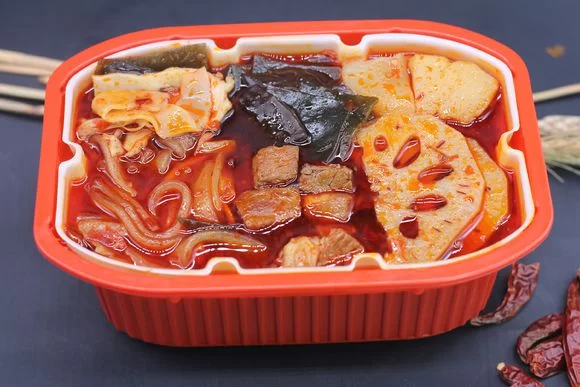
The idea is simple. Choosing the right pack is not always quite so simple.
The heater has to match the food weight, packaging, starting temperature, heating time, and the result you want. For a commercial food product, the food package itself also becomes part of the equation.
So what should you actually look for?
Let’s start with the questions buyers usually ask.
What Is a Food Heating Pack?
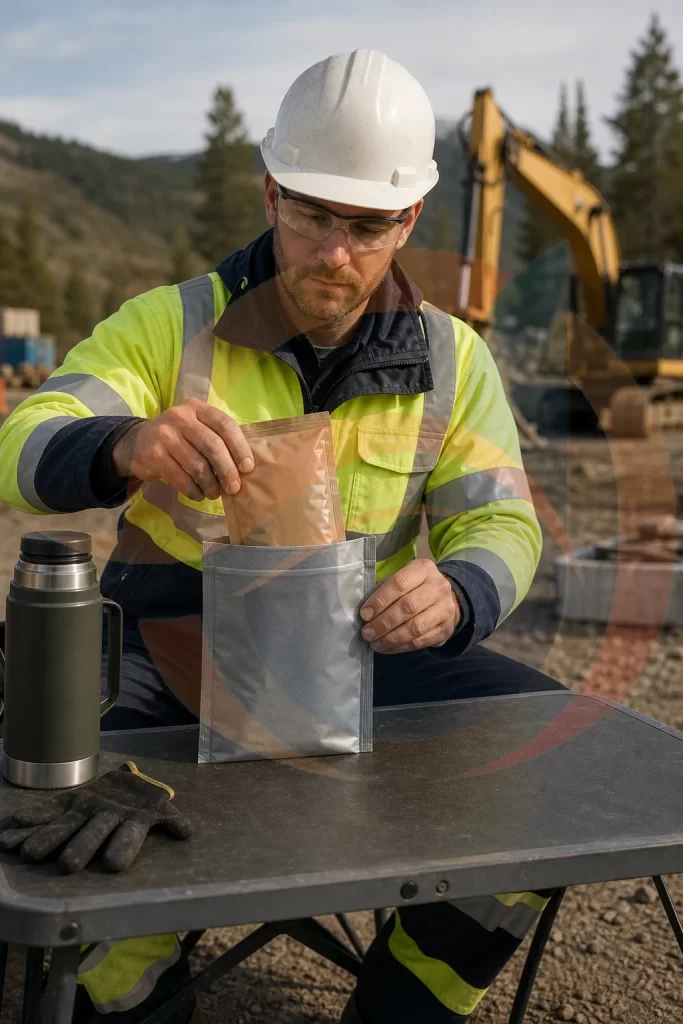
A food heating pack is a portable heat source designed to warm a compatible prepared meal without a conventional stove, microwave, or electrical connection. Many models are activated with a specified amount of water, which starts an exothermic reaction inside the heater and releases heat.
The heating pack remains physically separated from the food while heat passes through the compatible food packaging.
For packaged-meal applications, JOYTIDE supplies water-activated flameless food heating solutions that can be used with compatible meal pouches, heating bags, and self-heating food packaging systems.
How Does a Food Heating Pack Work?
A water-activated food heating pack works by using water to start a heat-producing reaction inside the sealed heater.
The heater is positioned next to or beneath the prepared meal. Once activated, it releases heat, which transfers through the food package and gradually raises the meal temperature.
The heater does not need to be mixed with the food.
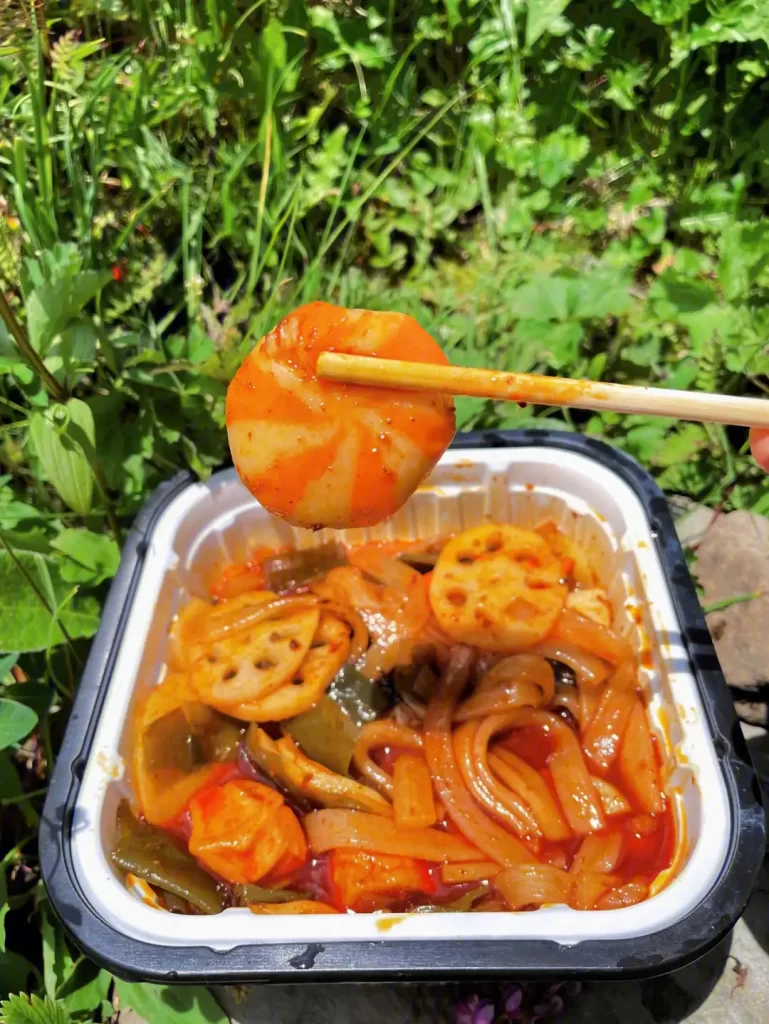
The basic process is:
Add the specified water → activate the heater → heat transfers to the meal → remove and eat the warmed food
The exact reaction, heater composition, activation method, and heating performance depend on the selected product.
JOYTIDE's Heizpackung auf Magnesiumbasis uses a packaged heater structure designed so that activation water can reach the heating composition while the heater remains enclosed and separate from the food.
Does a Food Heating Pack Need Electricity?
No. A water-activated food heating pack does not normally require electricity during use.
Instead of converting electrical energy into heat, the heating material generates heat after being activated with water.
That’s why these systems are useful for situations where there isn’t a convenient power source.
Camping is an obvious example, but it isn’t the only one.
A portable heater can also be useful for road trips, outdoor work, picnics, travel meals, and packaged food products designed for convenient preparation away from a kitchen.
It isn’t meant to replace a stove in every situation. A stove is still much more flexible when you actually need to cook.
A food heating pack is more specialized:
the meal is already prepared; the heater’s job is to warm it.
How Much Water Does a Food Heating Pack Need?
The correct amount of water depends on the specific heater.
There is no universal water quantity for every food heating pack.
Using too much or too little water can affect how the heating system performs, so the manufacturer’s instructions should always be followed.
For example, one heater may be designed around a particular pack weight and activation method, while another heater of a different size may require a different amount.
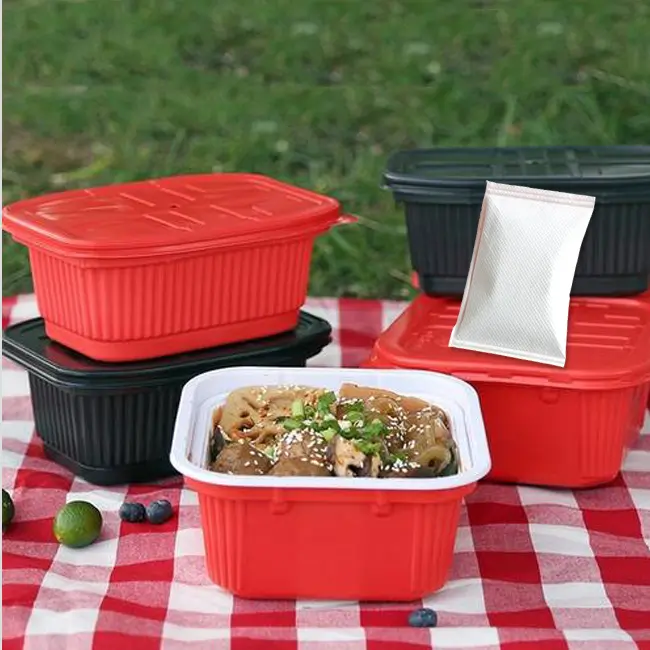
This is one reason commercial products should not simply copy the water instructions from another self-heating meal.
JOYTIDE's FAQ for flameless heaters also recommends using only the amount of activation water specified for the selected heater model.
For a consumer product, a clearly marked fill line or simple instruction can make the activation process much easier.
How Long Does a Food Heating Pack Take to Heat a Meal?
There is no single heating time that applies to every meal.
A food heating pack may warm one meal faster than another because heating performance depends on several variables, including:
| Faktor | Auswirkung auf die Erwärmung |
|---|---|
| Lebensmittelgewicht | More food generally requires more energy |
| Lebensmitteldicke | Deeper meals can take longer to warm through |
| Starttemperatur | Colder food requires a larger temperature increase |
| Heizgerätegröße | Different heater capacities produce different results |
| Wassermenge | Correct activation is important for consistent performance |
| Package structure | Shape and material affect heat transfer |
| Umgebungstemperatur | Kalte Umgebungen können den Wärmeverlust erhöhen. |
That is why a useful product specification should say more than:
“Heats in 10 minutes.”
A better question is:
“Ten minutes under what conditions?”
For a commercial meal, heating time should be measured with the actual food, actual package, actual heater, and a defined starting temperature.
What Temperature Can a Food Heating Pack Reach?
The heater itself and the food are two different things.
A heating pack can become significantly hotter than the final temperature of the meal because some of the generated heat is transferred through the packaging and some is lost to the surrounding environment.
So the most useful measurement isn’t simply the maximum temperature reached by the heater.
It is the temperature of the food after a defined heating period.
For example, a product development test might record:
Starting food temperature → 5 minutes → 10 minutes → 15 minutes → final food temperature
For thicker foods, it can also be useful to check more than one location.
The area closest to the heater may become warm before the center does.
That is why a commercial buyer should evaluate the actual meal rather than selecting a heating pack based only on a peak-temperature number.
What Foods Can a Food Heating Pack Warm?
A food heating pack can be paired with many types of prepared meals when the complete system has been designed and tested for them.
Common examples include:
- Reisgerichte
- Nudeln
- Pasta
- Suppen
- Eintöpfe
- Curry-style dishes
- Zubereitetes Gemüse
- Hot pot meals
- Verzehrfertige Lebensmittelbeutel
- Other compatible prepared meals
But the food itself is only half of the equation.
Consider two 400 g meals.
One is a flat rice pouch.
The other is a deep container filled with thick soup.
They have the same weight, but heat has to travel differently through each package.
For this reason, “400 g food” is useful information, but it isn’t enough information to determine the correct food heating pack.
Can a Food Heating Pack Warm Refrigerated Food?
It can be possible, but the heater should be selected and tested specifically for that condition.
A meal taken directly from refrigeration needs more heating energy than the same meal starting at room temperature.
This matters particularly for commercial food products.
If the customer is expected to take the meal from refrigerated storage and then heat it, the development test should reproduce that sequence.
Don’t test a room-temperature meal and assume the same heater will perform identically on a refrigerated product.
The packaging matters too.
The U.S. Food and Drug Administration identifies different conditions of use for food-contact substances, including refrigerated or frozen ready-prepared foods intended to be reheated in the container at the time of use. The FDA’s Lebensmittelarten und Verwendungsbedingungen für Lebensmittelkontaktmaterialien is a useful reference when evaluating packaging for a reheatable food product.
The practical lesson is simple:
test the food heating pack and food package together.
Does the Food Heating Pack Touch the Food?
No. In a properly designed self-heating food system, the heating material remains separated from the food.
The food stays in its own sealed pouch, tray, or container.
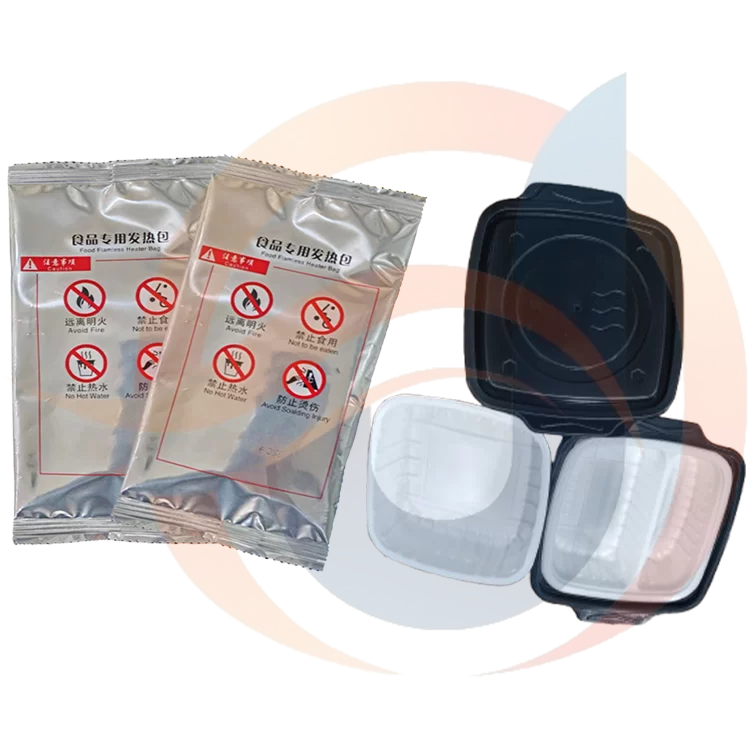
The heater stays in its own compartment or heating bag.
Heat passes between the two without the heating material becoming part of the meal.
This separation is especially important for commercial food packaging.
FDA defines food-contact substances broadly to include materials and components that come into contact with food, such as packaging and packaging components. Its consumer guidance explains that the intended use and safety of such materials are important considerations. You can review the FDA’s Lebensmittelverpackungen und andere Stoffe, die mit Lebensmitteln in Berührung kommen for additional background.
So when developing a self-heating meal, don’t think about the heater as a standalone product.
Think about the complete system:
heater + heating compartment + food package + food
Is a Food Heating Pack Safe?
A properly designed food heating pack is intended to keep the heating material separate from the food, but the system still produces heat and should be handled according to its instructions.
“Flameless” only means that the heating process does not rely on an open flame.
It does not mean there is no hot water, vapor, or hot surface during operation.
Basic handling precautions include:
- Verwenden Sie nur die angegebene Menge an Aktivierungswasser.
- Keep the heater material away from the food.
- Do not open the heater pack.
- Do not consume the heater material or activation water.
- Place the heating system on a stable surface.
- Keep any required ventilation path clear.
- Be careful when opening the heated food package.
- Das gebrauchte Heizgerät muss vor der Entsorgung abkühlen.
The instructions for the specific heater should always take priority over generic information.
Can You Use a Food Heating Pack to Cook Raw Food?
A typical food heating pack should be considered a meal warmer, not a general-purpose cooking appliance.
That’s an important distinction.
Prepared rice, noodles, soup, stew, and other ready-to-eat meals can be developed around a suitable heating system.
Raw meat or other uncooked ingredients are different. Cooking safely may require controlled temperatures, sufficient heating throughout the food, and other process controls that a general portable heater may not provide.
Unless the complete system has been specifically designed and validated for cooking the food involved, it is better to use a food heating pack for its intended purpose:
warming prepared food.
Does a Food Heating Pack Make the Meal Shelf-Stable?
NEIN.
The heating pack only provides heat.
It does not preserve the food or change the food’s storage requirements.
Whether a meal is shelf-stable depends on the food-processing method, packaging, and storage conditions.
For example, USDA explains that retort pouches are flexible packages for appropriate foods that undergo commercial thermal processing. The resulting retort package can be shelf-stable at room temperature. The shelf stability comes from that processing and packaging—not from adding a heating pack to the meal.
Das USDA beschreibt einen Retortenbeutel außerdem speziell als eine flexible Verpackung, die durch thermische Verarbeitung industriell sterilisiert wird.
Wenn Ihre zubereiteten Speisen also gekühlt werden müssen, ändert das Hinzufügen eines selbsterwärmenden Beutels daneben nichts an dieser Notwendigkeit.
Die Heizung heizt auf.
Das Lebensmittelverarbeitungs- und Verpackungssystem bestimmt die Lagerung.
Lebensmittelheizpackung vs. tragbarer Kocher
Diese beiden Produkte lösen unterschiedliche Probleme.
Ein tragbarer Kocher dient als Wärmequelle zum Kochen. Man kann Wasser kochen, rohe Zutaten garen, Kochgeschirr verwenden und Speisen von Grund auf zubereiten.
Ein Lebensmittelwärmer ist etwas viel Spezielleres.
| Besonderheit | Lebensmittel-Wärmepackung | Tragbarer Kocher |
|---|---|---|
| Strom | Normalerweise nicht erforderlich | Normalerweise nicht erforderlich |
| Offene Flamme | NEIN | Normalerweise |
| Zubereitete Speisen kochen | Ja, wenn kompatibel | Ja |
| Rohe Zutaten kochen | Normalerweise ist das nicht sein Zweck | Ja |
| Kochgeschirr | In der Regel unnötig | In der Regel erforderlich |
| Aufstellen | Einfach | Weitere Ausrüstung |
| Reinigung | Minimal | In der Regel erforderlich |
| Portabilität | Hoch | Hängt vom Herd und Brennstoff ab. |
| Am besten geeignet für | Fertiggerichte | Kochen |
Für jemanden, der das Essen bereits zubereitet hat und es einfach nur warm haben möchte, kann das Heizkissen viel unnötiges Equipment überflüssig machen.
Für jemanden, der kochen möchte, bleibt der Herd das vielseitigere Gerät.
Wie wählt man das richtige Lebensmittelwärmgerät aus?
Für den persönlichen Gebrauch ist es in der Regel am einfachsten, der vom Hersteller des Heizgeräts und der Fertiggerichte empfohlenen Kombination zu folgen.
Für einen Lebensmittelhersteller oder -importeur bedarf die Auswahl des Heizgeräts etwas mehr Überlegung.
Beginnen Sie mit diesen Fragen.
1. Wie viel Essen wärmen Sie auf?
Geben Sie dem Lieferanten das tatsächliche Nettogewicht der Lebensmittel pro Portion an.
300 g und 500 g erfordern nicht die gleiche Wärmemenge.
2. Wie sieht das Essen aus?
Ist es ein flacher Beutel?
Eine tiefe Schüssel?
Ein rechteckiges Tablett?
Eine geteilte Mahlzeit?
Die Form von Lebensmitteln beeinflusst, wie effizient Wärme durch das Produkt geleitet wird.
3. Welche Temperatur hat die Mahlzeit zu Beginn?
Lebensmittel, die bei Raumtemperatur gelagert werden, und gekühlte Lebensmittel erfordern unterschiedliche Erwärmungsbedingungen.
4. Welches Ergebnis wünschen Sie sich?
Sag nicht einfach:
“Wir brauchen es heiß.”
Definiere das Ziel.
Zum Beispiel:
“Wir möchten, dass das Gericht innerhalb einer festgelegten Zubereitungszeit die angestrebte Serviertemperatur erreicht.”
Das gibt dem Lieferanten etwas Messbares, mit dem er arbeiten kann.
5. Wie werden die Kunden es nutzen?
Camping?
Reisen?
Mahlzeiten im Freien?
Ein im Einzelhandel erhältliches, verzehrfertiges Produkt?
Ein selbstheizender Topf?
Der vorgesehene Anwendungsbereich kann Einfluss auf das Verpackungsformat und die Aktivierungsmethode haben.
Warum das Gewicht des Heizgeräts nicht ausreicht
Ein häufiger Fehler bei der Beschaffung ist der Vergleich von Lebensmittelheizpackungen ausschließlich anhand ihres Gewichts.
Zum Beispiel:
40 g vs. 50 g vs. 60 g
Es mag wie ein einfacher Vergleich aussehen.
Das Gewicht des Heizelements allein sagt jedoch nichts darüber aus, ob das Heizelement für Ihr Produkt geeignet ist.
Ein schwereres Heizgerät kann zwar eine höhere Heizleistung erbringen, aber das Gesamtsystem hängt immer noch vom Lebensmittelgewicht, der Verpackung, der Ausgangstemperatur und dem Wärmeaustausch ab.
Ein besserer Vergleich sieht so aus:
| Testpunkt | Zu erfassende Informationen |
|---|---|
| Lebensmittelart | Genaue Mahlzeit oder Rezept |
| Lebensmittelgewicht | Nettogewicht |
| Paket | Beutel, Tablett, Schüssel usw. |
| Verpackungsabmessungen | Tatsächliche Abmessungen |
| Starttemperatur | Vor der Aktivierung |
| Heizung | Genaues Modell/Spezifikation |
| Wasser | Aktivierungsmenge |
| Umgebungstemperatur | Testumgebung |
| Aufheizzeit | Mehrere Zeitpunkte |
| Lebensmitteltemperatur | Mehrere Messpunkte |
| Endergebnis | Gesamtheizleistung |
Das sind Informationen, die ein Lieferant von Lebensmittelheizpackungen tatsächlich nutzen kann.
Lässt sich ein Lebensmittelwärmer individuell anpassen?
Ja. Für gewerbliche Lebensmittelprojekte können unterschiedliche Heizgerätegrößen, Abmessungen, Heizleistungen, Verpackungsstrukturen oder Umverpackungsbeutel erforderlich sein.
Das Heizsystem kann auch in einen speziellen Speisebehälter integriert werden.
Zum Beispiel bietet JOYTIDE an selbsterhitzende Lebensmittelbehälter und Mahlzeitenboxen konzipiert um zubereitete Mahlzeiten wie Reis, Nudeln, Suppen, Eintopf und andere kompatible Lebensmittel.
Die Anpassung kann Folgendes umfassen:
- Heizgewicht
- Abmessungen der Heizung
- Heizleistung
- Heizfach
- Äußerer Heizbeutel
- Gedruckte Anleitung
- Innerer Lebensmittelbehälter
- Behälterform
- Eigenmarkenverpackung
- Kartonverpackung
Die genaue Konfiguration hängt vom jeweiligen Gericht und Projekt ab.
Was sollten Sie einem Lieferanten für ein Angebot für ein Lebensmittelheizgerät übermitteln?
Eine gute Untersuchung muss nicht kompliziert sein.
Geben Sie dem Lieferanten genügend Informationen, damit er die Anwendung versteht.
| Projektinformationen | Beispiel |
|---|---|
| Lebensmittelart | Reis / Nudeln / Suppe / Eintopf |
| Lebensmittelgewicht | 350 g pro Mahlzeit |
| Lebensmittelpaket | Flexibler Beutel |
| Verpackungsgröße | Tatsächliche Abmessungen |
| Starttemperatur | Gekühlt oder bei Raumtemperatur |
| Zielergebnis | Gewünschte Serviertemperatur |
| Aufheizzeit | Bevorzugtes Vorbereitungsfenster |
| Markt | Zielland |
| Menge | Muster + geschätzte Großbestellung |
| Anpassung | Bedruckter Beutel, Etikett, Anleitung |
Das ist wesentlich nützlicher als nur Folgendes zu senden:
“Bitte geben Sie Ihr Lebensmittelwärmpaket an.”
Für ein kommerzielles Projekt können Sie auch Fotos, Zeichnungen oder ein tatsächliches Lebensmittelverpackungsmuster einsenden.
Je genauer die tatsächliche Mahlzeit beschrieben wird, desto nützlicher kann die Empfehlung für das Heizgerät sein.
Was sollten Sie vor der Serienproduktion testen?
Dieser Teil sollte nicht übersprungen werden.
Eine Probe, die sich einmal erhitzt, reicht nicht aus, um ein gewerbliches Heizsystem zu genehmigen.
Testen Sie das tatsächliche Produkt.
Verwenden Sie die echten Lebensmittel.
Verwenden Sie die Originalverpackung.
Beginnen Sie mit der erwarteten Starttemperatur.
Notieren Sie anschließend das Ergebnis.
Achten Sie auf die Mitte der Mahlzeit, nicht nur auf den Bereich, der dem Heizgerät am nächsten liegt.
Prüfen Sie außerdem, ob:
- Die Lebensmittelverpackung ist unversehrt.
- Die Speise wird für ihren vorgesehenen Zweck gleichmäßig genug erhitzt.
- Der Heizbeutel lässt sich leicht aktivieren.
- Die Wassermenge lässt sich leicht messen.
- Die Verpackung ist angenehm zu handhaben.
- Die Anweisungen sind leicht verständlich.
- Mehrere Stichproben liefern einigermaßen übereinstimmende Ergebnisse.
In Bezug auf Verpackungen stellt die FDA in ihren Richtlinien klar, dass die Art des Lebensmittels und die Verwendungsbedingungen für Anwendungen mit Lebensmittelkontakt relevant sind. Daher sollte die Validierung von Verpackungen auf der tatsächlichen beabsichtigten Verwendung und nicht auf einer allgemeinen Aussage wie “Lebensmittelqualität” basieren.
Ein Fehler, den es zu vermeiden gilt: Das Heizgerät ohne Mahlzeit testen
Das passiert erstaunlich oft.
Ein Lieferant demonstriert, dass das Heizkissen sehr heiß wird.
Rein technisch gesehen ist das nützlich.
Aus wirtschaftlicher Sicht reicht das nicht aus.
Entscheidend ist, ob Ihre Mahlzeit ist nun servierfertig..
Ein Heizgerät, das mit einem dünnen Beutel gut funktioniert, kann sich bei einer dicken Schale anders verhalten.
Eine Heizung, die bei Raumtemperatur gut funktioniert, benötigt möglicherweise eine andere Konfiguration für gekühlte Lebensmittel.
Eine 250-g-Mahlzeit entspricht nicht automatisch einer 500-g-Mahlzeit.
Genehmigen Sie ein Lebensmittelheizpaket also nicht ausschließlich aufgrund folgender Kriterien:
Heiztemperatur + Heizgewicht + angegebene Aufheizzeit.
Approve it after testing the whole system.
A Practical Way to Develop a Self-Heating Meal
For a new food product, I would work from the inside out.
Step 1: Finalize the food.
Step 2: Confirm portion weight.
Step 3: Select the intended food package.
Step 4: Define the starting temperature.
Step 5: Define the desired heating result.
Step 6: Test a suitable food heating pack.
Step 7: Record the results.
Step 8: Adjust the heater or package if needed.
Step 9: Repeat the test.
Step 10: Confirm the final configuration before bulk production.
It may take a few rounds.
That’s normal.
The important thing is that the final specification comes from the actual meal rather than a guess based on heater weight alone.
What Makes a Good Food Heating Pack?
The answer isn’t simply “the hottest one.”
A useful food heating pack should match the meal it is intended to heat.
It should activate predictably, fit the packaging properly, generate appropriate heat for the application, and provide a user experience that isn’t unnecessarily complicated.
For commercial products, consistency matters just as much as heating power.
A buyer should therefore look at:
Compatibility → Heating performance → Packaging → User experience → Consistency
rather than only:
Price → Heater weight
That difference can save a lot of trouble during product development.
Häufig gestellte Fragen
What is a food heating pack?
A food heating pack is a portable heating component used to warm compatible prepared food. Water-activated versions generate heat through an exothermic reaction without requiring electricity or an open flame.
How does a food heating pack work?
The specified amount of water activates the heating material inside the pack. The resulting reaction releases heat, which transfers through compatible packaging to warm the prepared meal.
Does a food heating pack need electricity?
No. Water-activated models generate heat without an electrical connection during normal operation.
How much water does a food heating pack need?
The required amount depends on the heater specification. Always follow the activation instructions supplied for the particular heater.
How long does a food heating pack take?
Heating time depends on food weight, package shape, starting temperature, heater specification, activation water, and ambient conditions. Product-specific testing provides the most useful answer.
Can a food heating pack heat refrigerated meals?
A suitable heater may be able to warm refrigerated prepared food, but the lower starting temperature changes the heating requirement. Test the actual meal from the intended starting condition.
What foods can use a food heating pack?
Compatible prepared foods may include rice, noodles, pasta, soups, stews, hot pot, prepared dishes, and ready-to-eat food pouches. Compatibility depends on the complete heating system.
Kommt das Heizmaterial mit den Lebensmitteln in Berührung?
No. In a properly designed system, the heating material remains in its own pack and is physically separated from the food.
Can a food heating pack cook raw food?
Typical portable food heating packs are designed to warm prepared meals rather than cook raw food. Do not assume a standard heater is suitable for cooking raw ingredients.
Does a food heating pack make food shelf-stable?
No. The heater only warms the meal. Shelf stability depends on the food’s processing, packaging, and storage conditions.
Can food heating packs be customized?
Commercial projects may support different heater weights, dimensions, packaging structures, heating capacities, outer bags, instructions, and meal-container configurations.
What information should I provide when requesting a food heating pack?
Provide the food type, portion weight, package dimensions, starting temperature, target heating result, preferred heating time, destination market, and estimated quantity.
Looking for a Food Heating Pack for Your Product?
The right food heating pack is usually found by starting with the meal rather than the heater.
Tell the supplier what you’re heating, how much food is in each serving, what package you’re using, where the meal starts temperature-wise, and what heating result you need.
JOYTIDE-Lieferungen water-activated food heating packs, magnesium-based heating solutions, Und self-heating meal containers for compatible prepared-food applications.
Für ein neues Projekt, Kontaktieren Sie JOYTIDE with your meal specifications and estimated order quantity so the heating configuration can be evaluated with the actual product.

 English
  German
  French
  Korean
  Japanese
  Russian
  Arabic
  Portuguese
  Spanish