What Materials Are Used in Self-Heating Bags for Food?
A self-heating meal kit contains several kinds of packaging. The outer heating bag holds the operating assembly, the heater’s protective wrapper helps keep moisture out before use, and the food pouch contains the meal. Confusing these layers can lead to the wrong material request.
Our self-heating bag buying guide explains how the whole system is selected. This article helps buyers identify each packaging role and request the relevant specifications without guessing from appearance.
Quick Answer
Materials vary by design. A heating kit may use laminated films for its outer bag or protective wrappers, a permeable inner pouch for the heating composition, and a separate food pouch suitable for heating. A silver finish does not identify the full material structure. Request the construction and intended-use documentation for each component.
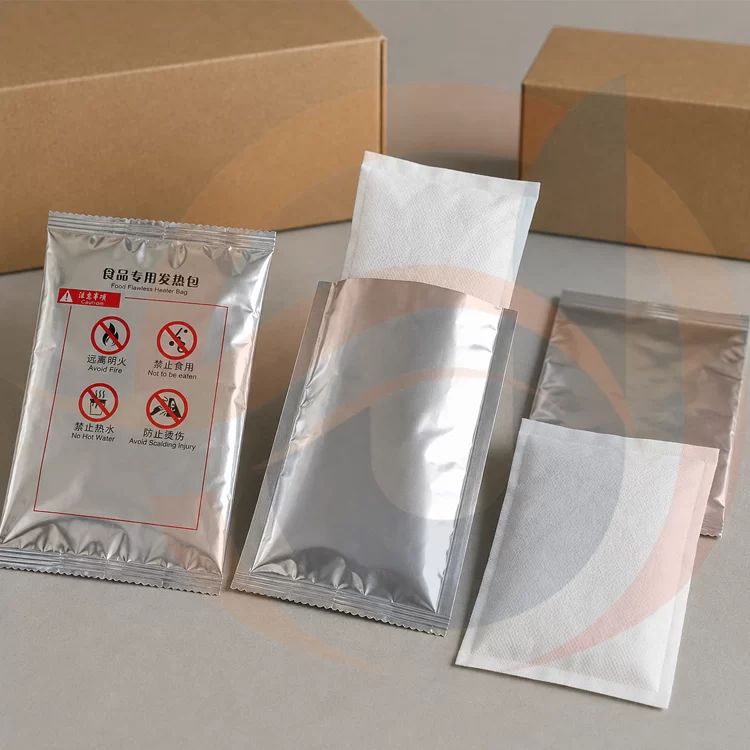
Website product illustration showing heater wrappers and inner pouches. Components shown are not an order packing list.
Distinguish the Four Packaging Roles
| Packaging part | وظيفة | Specification to request |
|---|---|---|
| Outer heating bag | Contains the intended operating arrangement | Structure, seams, use temperature, and liquid-exposure suitability |
| Protective heater wrapper | Limits moisture exposure before activation | Barrier and sealing requirements for storage |
| Inner heater pouch | Allows activation water to reach the composition while containing solids | Model-specific pouch structure and compatibility |
| Food pouch | Contains food throughout storage and heating | Food-contact suitability and intended heating conditions |
JOYTIDE describes a water-permeable inner pouch and a protective outer wrapper for its عبوات تدفئة مصنوعة من الألومنيوم. Confirm the construction for the exact model; do not assume every heating pack uses the same materials.
Why a Material Name Is Not a Complete Specification
Packaging can combine several layers, each serving a different function. A layer may provide mechanical support, another a barrier, and another the sealing surface. The finished performance also depends on how the layers and seams are made.
Terms such as “foil bag,” “plastic pouch,” or “food-grade material” do not describe all of this. A shiny surface may be a foil layer, a metallized layer, or another finish; the image alone cannot establish which.
Ask the supplier to identify the relevant construction and thicknesses, or provide a controlled specification with sufficient performance information where details are proprietary. Do not substitute an ordinary storage bag based only on a similar appearance.
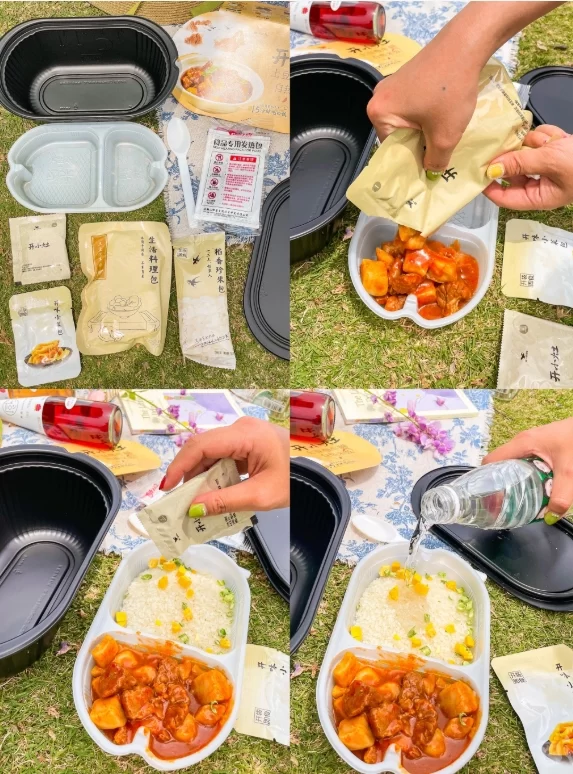
A silver finish does not identify the complete material structure. Editorial illustration; not a product specification or operating diagram.
Separate Direct Food Contact from Other Exposure
The food pouch directly contains the meal. The outer heating bag generally contacts the outside of that pouch and the heating assembly in the systems discussed here. Those are different exposure situations.
Food-contact assessments depend on intended use. See the FDA consumer overview of food-contact packaging.
A document for one material does not automatically cover every finished bag, seal, adhesive, printing ink, or operating condition. Request confirmation that the supplied documentation applies to the product and use you are specifying. Requirements also depend on the destination market.
Evaluate Seams and the Finished Bag
The film sheet is only part of the product. Seams, folds, openings, and any closure or vent feature must work in the complete system.
Check the finished sample for leakage, distortion, handling difficulty, and condition after the specified cycle. A correct film description does not compensate for a weak seal or an unsuitable bag layout.
The FDA’s chemistry recommendations for food-contact submissions discuss testing in relation to intended exposure. Use qualified technical review for the evidence needed for your product, rather than treating a generic reference as product certification.
Questions to Include in a Material Review
- Which component does this material specification describe?
- What heat and liquid exposure is it intended to experience?
- Which surfaces may contact food or the exterior of the food pouch?
- Does the evidence apply to the printed and sealed finished version?
- What storage conditions protect the unused heater?
- What changes would require the specification to be reviewed?
If repeated use is being considered, consult the component-by-component reuse guide. A material that performs in one heating cycle is not automatically suitable for repeated cycles and cleaning.
التعليمات
Are all silver heating bags made from the same material?
No. Appearance does not identify the full structure, thickness, or sealing layer. Request the supplier’s specification.
Can I use an ordinary zipper storage bag?
Do not substitute one for a purpose-designed heating bag. Its seams, materials, closure, and operating conditions may be unsuitable.
Does “food-grade” mean suitable for every heating process?
No. Suitability must match the intended use and exposure conditions. Confirm the finished package, not just a general material label.
Send JOYTIDE your material and destination-market requirements to confirm which product documents are available for review.