
If you’ve never used a flameless ration heater before, the basic idea can seem almost too simple.
There is no electrical cord.
There is no burner.
There is no microwave.
Instead, a sealed heating pack is activated with a specified amount of water, generates heat, and transfers that heat to a packaged meal.
But what is actually happening inside the bag?
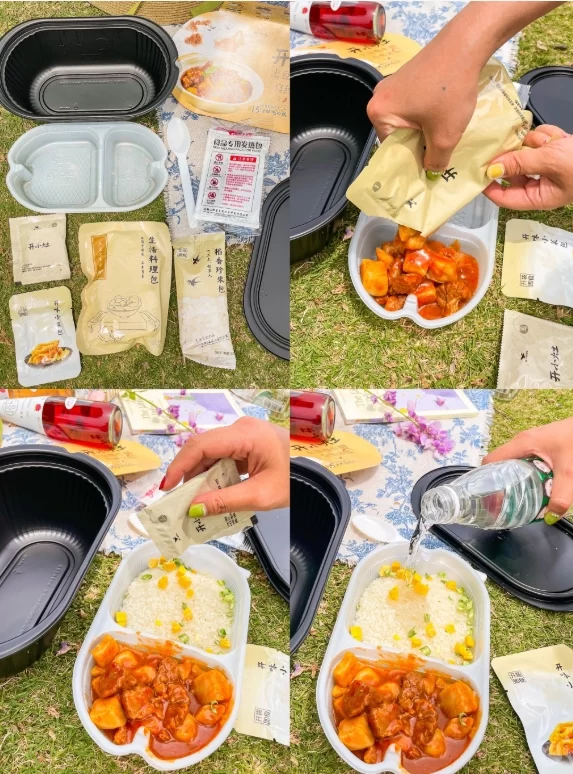
How does water create enough heat to warm food?
Why does one heater work well with one meal but not another?
And why does the amount of water matter?
Let’s break the process down from activation to the final warm meal.
How Does a Flameless Ration Heater Work?
A flameless ration heater works by using water to activate a heating material inside a separate heater pack. The resulting exothermic reaction generates heat, which transfers through compatible food packaging and warms the sealed meal without electricity or an open flame.
The process can be simplified into four stages:
1. Add the specified water.
2. The heating material reacts and releases heat.
3. Heat transfers from the heater through the food package.
4. The prepared meal becomes warm enough for serving, according to the system’s tested conditions.
The food and heating material remain separated throughout the process.
For a practical look at commercial configurations, see JOYTIDE’s flameless ration heater solutions.
What Activates a Flameless Ration Heater?
Water activates the heating material inside the heater pack. When the specified amount of water reaches the heating composition, an exothermic reaction begins and produces heat.
The exact formulation can vary between heater designs.
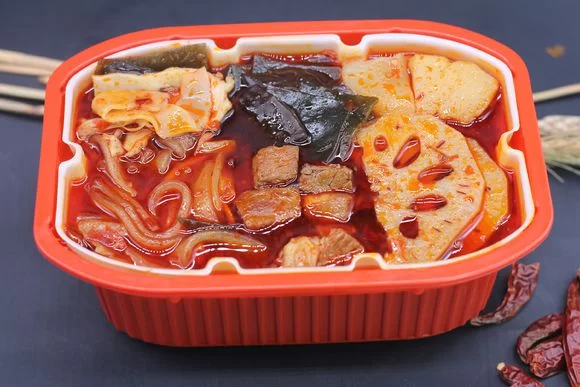
For example, JOYTIDE offers a [magnesium-based flameless ration heater] as one water-activated configuration. Its product page explains that water reaches the heating composition inside a permeable inner pouch, while a protective outer bag helps keep the unused heater protected from moisture during storage and transportation. Magnesium-Based Flameless Ration Heater
This construction solves two different problems at once.
Before use, the heater needs to stay dry.
During activation, water needs to reach the heating material.
The packaging therefore has to allow controlled activation while protecting the unused product from accidental moisture exposure.
Why Does Adding Water Produce Heat?
The simple explanation is that the heating material undergoes an exothermic reaction when it comes into contact with the specified activation water.
“Exothermic” simply means the reaction releases energy as heat.
That heat is captured by the surrounding heating system and transferred toward the meal.
The important point for a buyer is that this isn’t the same as burning fuel.
There is no conventional flame providing the heat.
The energy comes from the chemical reaction inside the heater.
That’s why a water-activated system can warm a prepared meal without requiring electricity or a separate cooking appliance.
Why Doesn’t the Heater Material Mix With the Food?
The heater material remains inside a separate heating pack while the food stays inside its own sealed pouch, tray, or container. Heat moves through the packaging rather than by mixing the heating material with the meal.
A simplified cross-section looks like this:
Heating material → heater pack → food packaging → food
This separation is fundamental to the design.
The heater needs contact with activation water, but it does not need contact with the food.
For commercial food products, that means the heater and food package should be evaluated as two parts of one heating system.
The U.S. Food and Drug Administration treats food packaging and other materials that contact food as food-contact substances and considers intended use and conditions of use in its regulatory framework. FDA — Food Packaging & Other Substances That Come in Contact with Food
What Happens Inside the Heating Bag After You Add Water?
Once the correct amount of water is added, the heating reaction starts.
The exact speed of the reaction depends on the heater formulation, its size, water quantity, and design.
As heat is released, the heating compartment becomes hot.
The heat then moves toward the meal.
At the same time, the surrounding environment is absorbing some heat.
This is why the final food temperature is never determined by heater temperature alone.
A simple way to think about the system is:
Heat generated − heat lost to the surroundings = useful heat transferred to the meal
That’s not a calculation you’ll normally make as a user.
But it explains why the same heating pack can perform differently under different conditions.
Why Does the Amount of Water Matter?
The correct amount of activation water is important because the heater is designed around a particular activation condition. Too little or too much water can change the way the heating system performs, so users should follow the specified water quantity for the selected model.
This is one of the easiest mistakes to make when using a self-heating product.
A buyer may think:
More water = more heat.
That isn’t necessarily true.
The heater is designed around a specific activation process.
That’s why different heater models can have different water requirements even if they look similar.
JOYTIDE’s product information also states that the required water volume depends on the selected heater model and formulation. JOYTIDE Flameless Heater FAQ
For consumer products, a printed water fill line can make the process much easier.
Does Hot Water Make a Flameless Heater Work Faster?
Not necessarily. Unless the product instructions specifically call for hot water, users should follow the specified activation method rather than changing the water temperature themselves.
The activation water is part of the heater’s operating conditions.
Changing the temperature, quantity, or activation procedure can make test results difficult to compare and may change how the heater behaves.
For commercial products, consistency matters.
If you test one sample with room-temperature water and another with hot water, you aren’t necessarily testing the heater under the same conditions.
How Does Heat Move From the Heater to the Food?
Heat moves from the activated heater through the surrounding packaging and into the food. The rate of heat transfer depends on the heater position, package material, package thickness, food thickness, and the distance between the heat source and the meal.
This is why packaging design matters so much.
Imagine a heater placed directly underneath a thin food pouch.
The heat has a relatively short path to the food.
Now imagine the same heater beneath a deep container.
The heat has farther to travel before reaching the center.
The amount of food may be identical.
The heating result can still be different.
That’s why heater selection should consider the actual package dimensions rather than food weight alone.
Why Does Food Shape Affect Heating?
Food thickness and package geometry affect how quickly heat reaches different parts of a meal. A thin pouch can heat differently from a deep tray even when both contain the same amount of food.
Consider these two meals:
300 g rice in a flat pouch
versus
300 g soup in a deep container
The weight is the same.
The heating path is not.
A deep meal can take longer for heat to reach its center.
This is particularly important for commercial food products because the customer doesn’t experience the temperature of the heater—they experience the temperature of the meal.
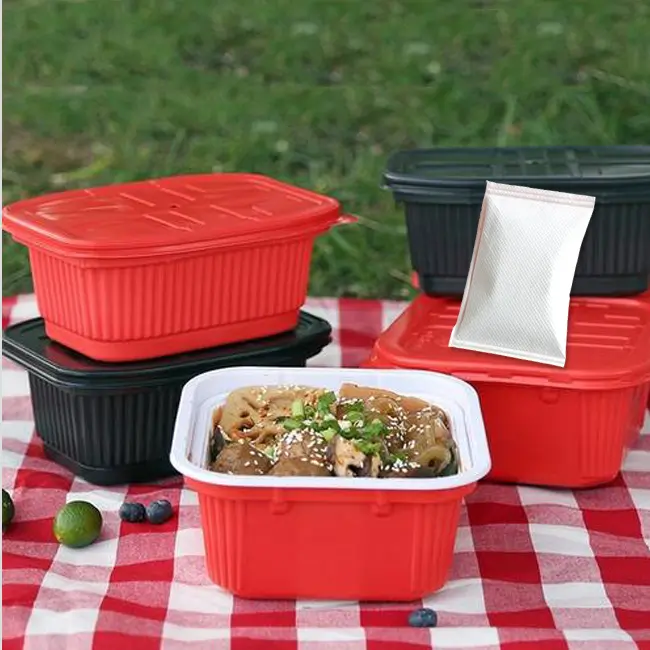
For tray-style applications, JOYTIDE also offers self-heating food containers and meal boxes for compatible rice, noodles, soups, hot pot products, and prepared meals.
Why Doesn’t a Bigger Heater Always Mean Better Heating?
A larger heating pack may generate more heat, but it is not automatically better for every meal. The useful heater is the one that matches the food weight, package, starting temperature, target heating result, and intended heating time.
This is an important distinction for buyers.
Suppose you have:
40 g heater
50 g heater
60 g heater
It’s tempting to choose the 60 g version immediately.
But what if your meal only needs the performance of the smaller heater?
Or what if the larger heater changes the packaging design?
Or what if the extra heating capacity doesn’t improve the actual food temperature enough to justify the additional material?
The answer comes from testing.
Not from heater weight alone.
What Determines How Long a Flameless Ration Heater Takes?
Heating time is affected by heater size and formulation, food weight, starting temperature, food thickness, package structure, activation water, heater-to-food contact, and ambient temperature. Because these conditions vary, there is no single heating time that applies to every meal.
This is why professional heater testing should record the conditions behind the result.
A simple test table might look like this:
| Test Item | Information to Record |
|---|---|
| Heater | Model and specification |
| Food | Exact meal |
| Food weight | Net weight |
| Starting temperature | Before activation |
| Package | Pouch, tray, or container |
| Water | Activation quantity |
| Ambient temperature | Test environment |
| Heating time | Defined intervals |
| Food temperature | Multiple measurement points |
| Final result | Overall performance |
JOYTIDE’s current product information similarly notes that heating time depends on heater size, meal weight, starting temperature, packaging structure, and ambient conditions. JOYTIDE Flameless Ration Heater
Does a Flameless Ration Heater Heat the Food Evenly?
Not necessarily. Heating uniformity depends on the food, package shape, heater position, food thickness, and heat transfer. The part of the meal closest to the heater can warm faster than the center.
For a thin pouch, temperature differences may be relatively manageable.
For a deep meal, the center can be slower to warm.
That’s why a good product test should not always rely on a single temperature measurement.
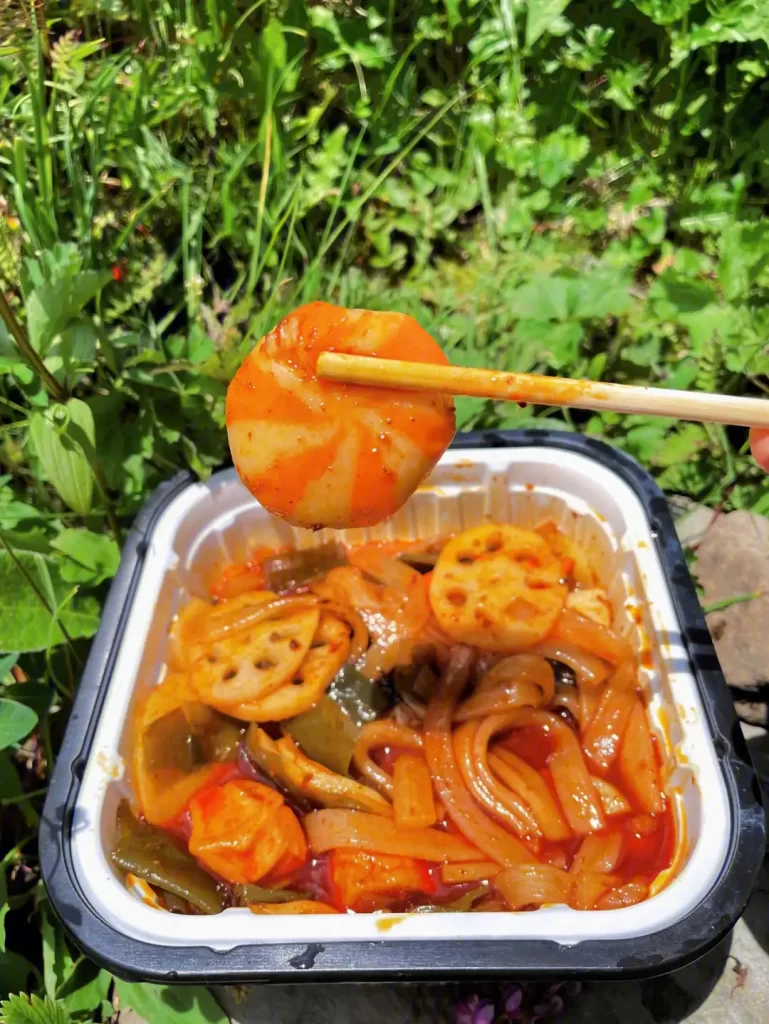
For commercial development, measuring several locations can reveal whether the meal is heating consistently.
A useful test might compare:
Near heater → middle of meal → center → upper area
The exact testing method should match the product and its intended use.
Can a Flameless Ration Heater Warm Refrigerated Food?
A suitable flameless ration heater may be able to warm refrigerated prepared food, but colder food requires more heating energy. If refrigerated use is expected, testing should start from the actual temperature at which customers are expected to use the meal.
This is an important difference.
A meal beginning at room temperature and the same meal beginning directly from refrigeration are not equivalent tests.
For commercial food brands, the complete sequence should be reproduced:
Storage condition → meal removal → heater activation → heating → serving
Packaging must also be suitable for the intended heating conditions.
FDA’s official conditions-of-use table specifically includes frozen or refrigerated ready-prepared foods intended to be reheated in the container at the time of use. FDA — Food Types & Conditions of Use for Food Contact Substances
So don’t evaluate the heater separately from the food package.
What Types of Food Can Be Heated?
A compatible flameless ration heater can be used with prepared foods such as rice, noodles, soups, stews, pasta, hot pot products, and other sealed ready-to-eat meals. The actual combination should be tested because food weight, thickness, packaging, and starting temperature affect heating performance.
The important word is compatible.
A heater isn’t automatically suitable for every meal.
For example:
- Thin rice pouch
- Thick noodle meal
- Deep soup container
- Divided meal tray
These products can behave differently even if the serving weight is similar.
JOYTIDE’s [self-heating food container range] is designed around different prepared-food formats where a container-based system is more suitable than a simple pouch. Self-Heating Food Containers | Hot Pot & Meal Boxes
Can a Flameless Ration Heater Cook Raw Food?
A typical flameless ration heater is designed to warm prepared food rather than cook raw ingredients. It should not be treated as a conventional cooking appliance unless the complete system has specifically been designed and validated for the particular raw food and cooking process.
This distinction is important.
Heating a prepared rice meal is one task.
Cooking raw meat safely is another.
A typical portable meal heater is designed around the first problem.
For most products, the intended process is:
Prepared meal → warmed meal
not:
Raw ingredients → cooked meal
This keeps expectations realistic and makes the product easier for customers to understand.
Does a Flameless Ration Heater Need an Open Flame?
No. A flameless ration heater generates heat without an open flame or conventional burner. Water activates the heating material, and the resulting reaction produces the heat used to warm the meal.
That’s what makes the system useful in situations where a flame-based cooking setup isn’t convenient.
But again, “flameless” doesn’t mean “no heat.”
The heater can still become hot enough to require careful handling.
Is the Heating Process Safe?
A properly designed flameless heater keeps the heating material separated from the food, but the system still generates heat and may produce hot water or vapor. Users should follow the specific instructions supplied with the heater.
Basic precautions include:
- Use only the specified amount of water.
- Keep the heater material separate from food.
- Do not open the heating pack.
- Do not consume the heater material.
- Do not consume activation water.
- Keep the system stable while heating.
- Keep intended venting paths clear.
- Avoid unnecessary contact with the activated heater.
- Handle the heated food package carefully.
- Let the used heater cool before disposal.
JOYTIDE’s product information specifically instructs users not to open the heating element, block escaping steam, or allow heater contents to contact food. JOYTIDE Magnesium-Based Flameless Ration Heater
Why Does the Heating Bag Need to Stay Dry Before Use?
A water-activated heater needs to remain protected from unintended moisture before use because accidental activation or moisture exposure can affect storage stability and product performance.
That’s why the heater is packaged in moisture-protective outer packaging.
The outer packaging has an important job before activation:
keep moisture out.
After activation, the role changes:
allow the specified water to reach the heating material.
JOYTIDE’s magnesium-based heater page describes an inner permeable pouch and protective outer bag designed around these two stages. Magnesium-Based Flameless Ration Heater construction
This is one reason packaging design is part of the heater rather than simply an attractive outer layer.
How Should Unused Flameless Ration Heaters Be Stored?
Unused flameless ration heaters should remain in their original sealed packaging and be kept away from moisture and heat sources, following the manufacturer’s storage instructions.
JOYTIDE’s current product information recommends keeping unused heaters in their original sealed packaging in a cool, dry location and protecting them from moisture, heat sources, children, and damaged packaging. JOYTIDE Flameless Ration Heater storage guidance
For commercial buyers, storage conditions should also be considered during transportation and warehouse handling.
A heater that arrives already exposed to moisture isn’t the same product you tested during development.
What Happens After the Heating Reaction Is Finished?
Once the reactive material has completed its heating cycle, its original heating capacity is no longer available.
That’s why most water-activated heating packs are designed for single-use applications.
The used pack should be allowed to cool before disposal according to the instructions for the specific product and destination market.
For a commercial meal, this means the heater is normally treated as a consumable component.
The customer receives:
one meal + one compatible heating cycle
rather than a reusable electric appliance.
Why Is Packaging So Important to the Working Principle?
The food package controls the physical separation between the heater and food while also influencing heat transfer. Package material, thickness, shape, and intended heating conditions can all affect the final heating result.
This is particularly important for packaged ready-to-eat food.
A pouch designed for room-temperature storage isn’t automatically suitable for every reheating application.
FDA’s guidance recognizes different food types and conditions of use, including ready-prepared foods stored refrigerated or frozen and reheated in the container at the time of use. FDA Food Types & Conditions of Use
FDA also explains that food-contact substances include packaging and packaging components, and that authorization and safety assessment are tied to intended use. FDA Food Contact Substances Overview
So the proper development sequence is not:
Choose heater → find package later
It is closer to:
Food → package → heater → complete heating system
Does a Flameless Ration Heater Make Food Shelf-Stable?
No. A flameless ration heater only warms food. It does not preserve the meal or change its storage requirements. Shelf stability depends on food processing, packaging, and storage conditions.
This distinction is easy to miss.
A refrigerated food product doesn’t become shelf-stable because a heating pack is placed beside it.
Shelf stability is determined by the food’s own processing and packaging.
For example, USDA describes shelf-stable foods in relation to commercial processing and packaging methods, including retort packaging. USDA — Shelf-Stable Food Safety
The heater has a different purpose:
It provides heat when you want to eat the meal.
What Is the Difference Between Heater Temperature and Food Temperature?
Heater temperature describes the heat source, while food temperature describes the actual result experienced by the customer. A hot heating pack does not automatically mean the entire meal has reached the desired serving temperature.
This is a useful distinction when comparing suppliers.
Imagine a heater that becomes extremely hot.
If the package is thick and the meal is deep, much of that heat still has to travel through the packaging and food.
So the heater may be very hot while the center of the meal is still warming.
That’s why product-development testing should focus on the food result rather than heater temperature alone.
How Should You Test a Flameless Ration Heater?
The most useful test uses the actual heater, actual meal, actual food package, actual starting temperature, and specified activation method. Measure the food temperature over time rather than testing the heater alone.
For example, a product test can record:
Before activation
Meal starting temperature
After activation
Water quantity and heater condition
During heating
Food temperature at defined intervals
After heating
Temperature at multiple points if needed
Final inspection
Package condition and user handling
This gives you a realistic picture of the complete product.
Testing a cup of water may tell you something about the heater.
Testing your actual meal tells you whether the finished product works.
What Information Does a Supplier Need to Select the Heater?
A supplier normally needs the food type, meal weight, package dimensions, starting temperature, desired heating result, preferred heating time, destination market, estimated quantity, and customization requirements to evaluate a suitable heater configuration.
A practical inquiry might look like this:
We need a flameless heater for a 400 g prepared rice meal in a flexible pouch. The meal starts at room temperature and should reach our target serving temperature within a defined heating period.
That’s already much more useful than:
“Please quote your ration heater.”
You can also provide:
- Food photos
- Package drawings
- Pouch dimensions
- Tray dimensions
- Sample packaging
- Target temperature
- Desired heating time
- Estimated order quantity
JOYTIDE’s current product page specifically asks customers to provide meal type, food weight, pouch dimensions, target heating time, destination market, and estimated order quantity when discussing a suitable configuration. JOYTIDE Custom Heater Solutions
Can the Heater Be Customized?
Commercial flameless ration heaters can be configured according to the meal and packaging requirements. Depending on the project, customization may include heater size, weight, heating capacity, outer bag dimensions, printed instructions, private-label packaging, and packing configuration.
JOYTIDE currently lists multiple configuration options, including different heater weights and formats, outer bags, printed instructions, private-label packaging, and bulk packing. JOYTIDE Flameless Ration Heater Solutions
For some projects, the heater itself is only one part of the customization.
The entire system may need to be adjusted:
heater + heating bag + food pouch + container + instructions
That’s particularly relevant when launching a new self-heating food product.
What Are the Most Common Mistakes When Using a Flameless Ration Heater?
There are a few mistakes that come up repeatedly.
Using the Wrong Amount of Water
The activation quantity should come from the selected heater’s instructions.
Assuming Every Meal Heats the Same
Food weight is only one variable.
Testing Only the Heater
The actual meal and package need to be tested too.
Ignoring Starting Temperature
Room-temperature and refrigerated meals can behave differently.
Assuming “Food Grade” Means “Suitable for Every Heating Condition”
Packaging suitability depends on the actual intended use and conditions.
Choosing by Heater Weight Alone
A heavier heater isn’t automatically the correct heater.
None of these problems are particularly complicated.
They mostly come down to treating the heater as a standalone product instead of part of a complete meal-heating system.
A Simple Example of How the System Comes Together
Imagine a food brand has developed a 400 g rice meal.
The meal is sealed in a flexible pouch.
It is expected to start at room temperature.
The target is a warm serving temperature after a defined heating period.
The development process would look something like this:
1. Confirm the 400 g food weight.
2. Confirm the pouch dimensions.
3. Define the starting temperature.
4. Define the target food temperature.
5. Select a candidate heater.
6. Use the specified activation water.
7. Measure food temperature at several time points.
8. Inspect the pouch and heating bag.
9. Repeat with multiple samples.
10. Adjust the heater or package if necessary.
Only after that do you have useful information about whether the configuration is suitable.
The Working Principle Is Simple. The Complete System Is Not.
At the most basic level, the operating principle is easy to remember:
Water activates the heater.
The heater generates heat.
Heat moves through the package.
The food warms.
But a good self-heating meal requires more than that.
The heater needs to match the food.
The packaging needs to tolerate the intended use.
The activation process needs to be simple.
The heating performance needs to be tested.
And the final product needs to be practical for the person who is actually going to eat it.
That’s why the best heater isn’t necessarily the hottest one.
It’s the one that works properly with the meal.
Frequently Asked Questions
How does a flameless ration heater work?
A flameless ration heater uses a water-activated heating material to generate heat through an exothermic reaction. The heat transfers through compatible food packaging to warm a sealed prepared meal.
Does a flameless ration heater need electricity?
No. Water-activated models generate heat without an electrical outlet during normal use.
What activates a flameless ration heater?
A specified amount of water activates the heating material inside the heater pack.
How much water does a flameless ration heater need?
The required amount depends on the heater model and formulation. Always follow the instructions for the selected heater.
How long does a flameless ration heater take to heat food?
Heating time depends on heater specification, meal weight, starting temperature, food thickness, package structure, water quantity, and ambient conditions.
Does the heating material touch the food?
No. The heater remains physically separated from the food inside its own pack while the food stays in its pouch, tray, or container.
Can a flameless ration heater heat refrigerated food?
A suitable heater may be able to warm refrigerated prepared food, but colder starting temperatures require more heating energy. The actual meal should be tested from its intended starting condition.
What foods can a flameless ration heater heat?
Compatible prepared foods can include rice, noodles, soups, stews, pasta, hot pot products, and other ready-to-eat packaged meals.
Can a flameless ration heater cook raw food?
Typical portable heaters are intended to warm prepared food rather than cook raw ingredients.
Can a flameless ration heater be reused?
Most water-activated heating packs are designed for a single heating cycle.
Does the heater make food shelf-stable?
No. The heating pack provides heat but does not change the food’s processing, packaging, or storage requirements.
Why is the food package important?
The package separates the heater from the food and affects heat transfer. Its material, thickness, shape, and intended heating conditions should be evaluated for the actual product.
Can the heater size be customized?
Depending on the product and project, heater weight, dimensions, heating capacity, outer bag, printed instructions, private-label packaging, and packing configuration may be customized.
What information should I send a supplier?
Provide the food type, meal weight, package dimensions, starting temperature, target heating result, preferred heating time, destination market, estimated quantity, and customization requirements.
Looking for a Flameless Ration Heater for Your Meal?
Now that the working principle is clear, the next step is matching the heater to the actual food.
JOYTIDE supplies flameless ration heaters, magnesium-based heating packs, aluminum heating packs, and self-heating food containers for compatible ready-to-eat food applications.
For a new project, contact JOYTIDE with your food type, meal weight, packaging dimensions, starting temperature, target heating result, destination market, and estimated quantity.
The most useful place to start is not the heater.
It’s the meal.

 English
  German
  French
  Korean
  Japanese
  Russian
  Arabic
  Portuguese
  Spanish