
A hot meal is easy to take for granted when a microwave, stove, or electric kettle is nearby. But what happens when you are camping, traveling, working outdoors, preparing an emergency food kit, or simply away from conventional kitchen facilities?
Flameless ration heater bags provide a compact way to warm compatible prepared meals without an electrical outlet or an open flame.
These portable heating systems use a water-activated heating element positioned alongside a sealed food pouch or within a compatible food container. Add the specified amount of water, follow the product instructions, and the heater generates heat through an exothermic reaction.
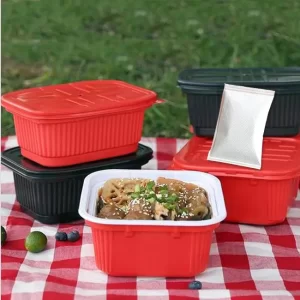
For consumers, this can mean a more convenient way to enjoy a warm prepared meal away from a kitchen.
For ready-to-eat food manufacturers, distributors, emergency-food brands, and private-label buyers, self heating bags for food can also become part of a complete self-heating meal solution.
But not every heater bag works with every meal. Food weight, packaging dimensions, starting temperature, heater configuration, water quantity, and intended use conditions all affect performance.
This guide explains how flameless ration heater bags work, where they can be used, and what buyers should consider when choosing one.
Réponse rapide : Qu'est-ce qu'un Flameless Ration Heater Bag?
A réchaud de rationnement sans flamme bag is a portable food-heating system designed to warm compatible prepared meals without an open flame or electrical power.
The system generally combines:
- Un élément chauffant activé par l'eau
- A compatible outer heating bag or compartment
- A sealed prepared-food pouch or tray
- Activation instructions and water-level guidance
When the specified amount of water reaches the heating element, an exothermic reaction begins and releases heat.
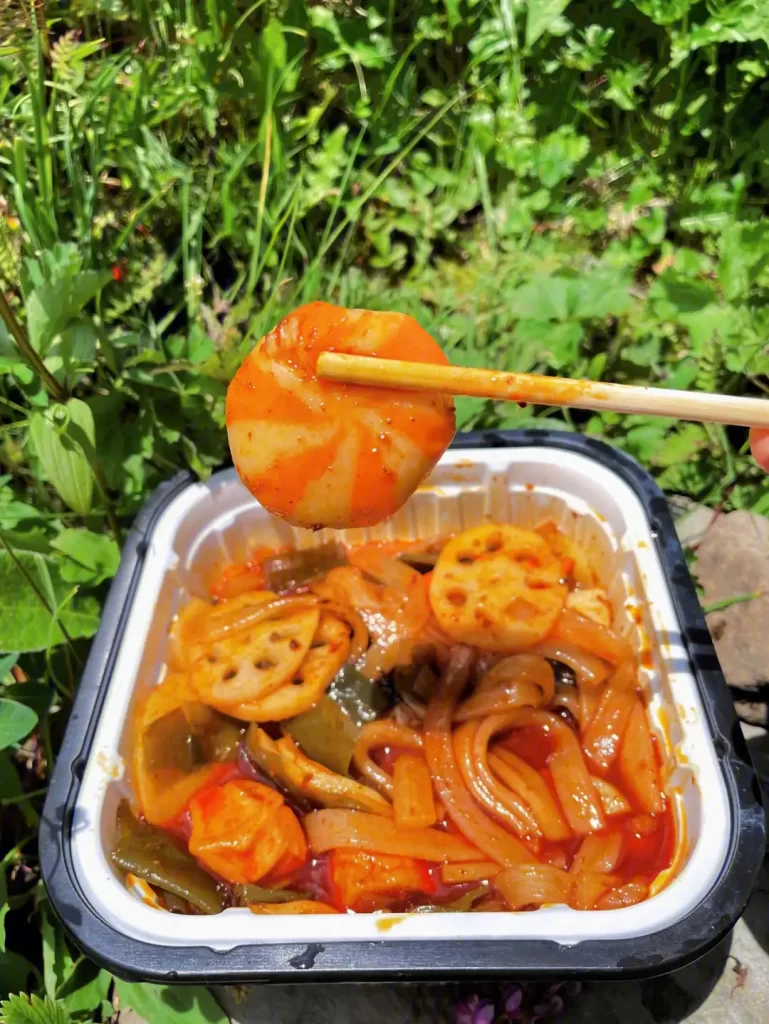
The food remains separated from the heating material. Heat transfers through the compatible packaging to warm the meal.
Most portable heater packs are intended for one heating cycle and are primarily designed for warming prepared food rather than cooking raw ingredients.
How Do Self Heating Bags for Food Work?
The principle behind a sac auto-chauffant pour aliments is relatively simple, but the complete heating system needs to be properly matched.
1. Water Activates the Heating Element
The heating pack contains a specially formulated heating composition.
After the specified amount of water is added, the heating reaction begins.
This means the heater does not depend on a wall outlet, battery, microwave, or conventional burner.
2. The Heater Generates Heat
The water-activated reaction releases thermal energy.
The exact reaction characteristics depend on the heater formulation and design, which is why users should always follow the water quantity and heating instructions supplied with the specific product.
3. Heat Transfers to the Food
The sealed prepared meal is positioned next to the heater or above a dedicated heating compartment.
Heat then transfers through the food packaging.
The heating material itself should remain physically separated from the food.
4. The Prepared Meal Warms Gradually
Heating time and final food temperature depend on several factors, including:
Food weight → Packaging → Starting temperature → Heater configuration → Water quantity → Ambient conditions
This is why comparing heater packs based only on their dimensions or weight can be misleading.
What Is Inside a Flameless Food Heater Bag?
A complete portable food-heating solution usually involves more than just the heater pack.
Heating Element
This is the component that generates heat after activation.
Different heater formulations, sizes, and filling weights are available for different meal requirements.
Outer Heating Bag
Le flameless food heater bag helps position the heating element and food pouch correctly.
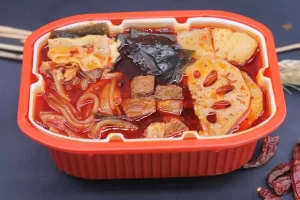
Its design can also influence heat retention and the overall user experience.
Food Pouch
Prepared food remains sealed inside compatible packaging during heating.
The pouch needs to fit the heating system and be suitable for the intended heating conditions.
Activation Water
Water initiates the heating reaction.
Always use the amount specified for the particular heater. Do not assume that adding more water will improve heating performance.
Instructions
Clear instructions should explain water quantity, positioning, heating time, handling, ventilation, and disposal.
For commercial products, good instructions are an important part of the complete self-heating meal system.
What Foods Can Be Used with Flameless Ration Heater Bags?
Flameless heater bags are generally intended for prepared foods packaged in compatible pouches or containers.
Depending on the system, applications may include:
- Repas de riz préparés
- Pâtes
- Nouilles
- Curries
- Ragoûts
- Beans
- Prepared soups
- Ready-to-eat meal pouches
- Other compatible prepared foods
However, a portable heater should not automatically be treated as a substitute for conventional cooking.
Can Flameless Ration Heater Bags Cook Raw Food?
Typical portable ration heaters are designed to plats chauds préparés, not cook raw ingredients.
Raw meat, poultry, seafood, and other foods requiring validated cooking temperatures should not be placed into an ordinary self-heating system with the assumption that the heater will safely cook them.
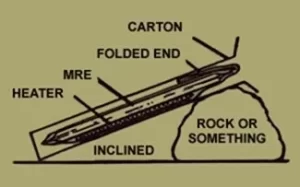
If a product is intended to cook rather than simply warm food, the complete food-and-heater system needs to be specifically designed and validated for that purpose.
Where Are Portable Self Heating Bags Useful?
L'un des plus grands avantages d'un portable food heater bag is flexibility.
Camping
For campers carrying prepared meals, a water-activated heater can provide a convenient alternative when a compatible meal needs warming.
Users should still follow local regulations and the heater manufacturer’s instructions regarding placement and ventilation.
Hiking and Outdoor Activities
Compact heater packs can fit into portable meal systems where minimizing equipment is important.
Because there is no conventional burner to assemble, meal preparation can be relatively straightforward.
Travail en extérieur
Construction teams, field technicians, utility workers, survey crews, and other people working away from kitchen facilities may benefit from portable meal-heating options.
Road Trips
A self-heating prepared meal can be useful during appropriate rest stops when conventional food-heating facilities are unavailable.
Do not activate a heater in an unsuitable enclosed environment simply because the product is described as flameless.
Préparation aux situations d'urgence
Power outages and other disruptions can make conventional kitchen appliances unavailable.
A supply of compatible prepared meals and water-activated heater packs can provide an additional meal-heating option within a broader emergency preparedness plan.
Ready-to-Eat Food Products
Food manufacturers can integrate heater packs with compatible pouches, trays, bowls, or other packaging to create commercial self-heating meal products.
Flameless Ration Heater Bag vs. Traditional Food Heating
Why would someone choose a flameless heater instead of a stove or microwave?
The answer depends on the intended application.
Electricity
A microwave or electric cooker requires a suitable electrical supply.
A water-activated heater does not require an electrical outlet.
Open Flame
Conventional camping burners rely on combustion.
A flameless ration heater generates heat through a chemical reaction rather than an open flame.
Portability
A heating pack can be lightweight and compact, making it suitable for integration into individual meal kits.
Preparation
A properly designed system can reduce the number of separate cooking components required to warm a prepared meal.
However, these benefits come with trade-offs.
Most heater packs are single-use, require activation water, need compatible food packaging, and must be operated according to product-specific safety and ventilation instructions.
For foods that need actual cooking, a suitable conventional cooking method may still be required.
Comment utiliser un Flameless Ration Heater Bag
Different products can have different activation methods, so always follow the instructions supplied with the heater.
A typical pouch-style system may work as follows:
Step 1: Inspect the Packaging
Check the food pouch, heater pack, and outer heating bag for visible damage.
Step 2: Read the Instructions
Identify the required water quantity, heater position, heating time, and handling requirements.
Step 3: Position the Heater and Food
Place the sealed prepared meal and heating element in their designated positions.
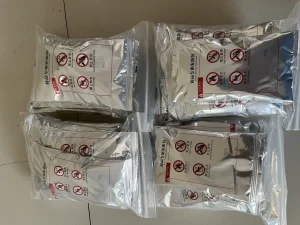
Do not open the heating element or allow its contents to contact the food.
Step 4: Add the Specified Water
Add only the quantity specified for the heater.
The correct amount of water is part of the heater’s intended operating conditions.
Step 5: Position the Heating Bag Correctly
Place the assembly on a stable surface and maintain the required ventilation.
Never intentionally make the heating system airtight.
Step 6: Allow the Meal to Heat
Wait for the recommended heating period.
Avoid unnecessary contact with the bag while the reaction is occurring.
Step 7: Remove the Food Carefully
Hot vapor, liquid, packaging, and heater components may be present.
Step 8: Allow the Heater to Cool
Follow the manufacturer’s disposal instructions after the used heater has cooled.
Are Réchaud de rationnement sans flamme Bags Safe?
They can be used safely when the complete product is designed appropriately and its instructions are followed.
But the word “flameless” should not be interpreted as “no precautions required.”
Water-activated heaters generate substantial heat. Depending on the formulation, the reaction can also generate vapor and gases.
Users should therefore pay attention to:
Ventilation: Follow the manufacturer’s ventilation requirements.
Hot surfaces: Keep the active heater away from bare skin.
Steam and vapor: Do not position your face directly over an operating heater.
Water quantity: Use the specified amount.
Food separation: Never consume activation water or heater material.
Sealed environments: Do not make the heating assembly airtight.
Children: Keep active and unused heater packs appropriately stored and supervised.
For commercial buyers, safety should be evaluated as part of the complete heater + packaging + food + instructions system.
How Long Does a Self Heating Bag Take to Heat Food?
There is no universal heating time for every sac auto-chauffant pour aliments.
Heating performance depends on:
| Facteur | Pourquoi c'est important |
|---|---|
| Poids des aliments | Les portions plus importantes nécessitent généralement plus d'énergie. |
| Épaisseur des aliments | Heat takes longer to reach the center of deeper meals |
| température initiale | Les aliments froids nécessitent d'être davantage réchauffés. |
| Spécifications du chauffage | Different heater configurations provide different output |
| quantité d'eau | Correct activation depends on the specified amount |
| Conditionnement | Material and design affect heat transfer |
| Température ambiante | Cold environments can increase heat loss |
For this reason, commercial buyers should be cautious about comparing two heater suppliers simply based on claims such as “heats in X minutes.”
The test conditions matter.
A meaningful test should identify the meal weight, starting temperature, package dimensions, ambient conditions, water quantity, heater specification, and food temperature after defined periods.
Comment choisir le bon Flameless Ration Heater Bag
This is particularly important for food manufacturers and B2B buyers.
Start with Your Food
Don’t begin by asking:
“What is your biggest heater?”
A better starting point is:
“I have a 350 g prepared rice meal in this pouch. What heater configuration should I test?”
The heater should be selected around the actual product.
Provide the Food Weight
Tell your supplier the net weight of the prepared meal.
For example:
250 g / 350 g / 500 g
Food weight is one of the major factors affecting heating requirements.
Provide Packaging Dimensions
Send the actual:
Length × Width × Thickness/Depth
A 400 g meal in a flat pouch can behave differently from the same amount of food in a deep tray.
Tell the Supplier the Starting Temperature
Is the meal expected to begin at:
Température ambiante ?
Cool warehouse temperature?
Cold outdoor temperature?
Testing should reflect realistic use conditions.
Define the Heating Objective
Instead of simply requesting “very hot food,” define measurable requirements.
For example:
Food weight + starting temperature + target temperature + expected heating period.
This gives the manufacturer something meaningful to evaluate.
Heater Bags for Food Pouches vs. Self-Heating Containers
Not every self-heating meal needs the same packaging structure.
Pouch-Style Heater Bags
These systems typically place a sealed prepared-food pouch next to a heater inside an outer heating bag.
They can be compact and suitable for individually packaged meals.
Tray or Bowl Systems
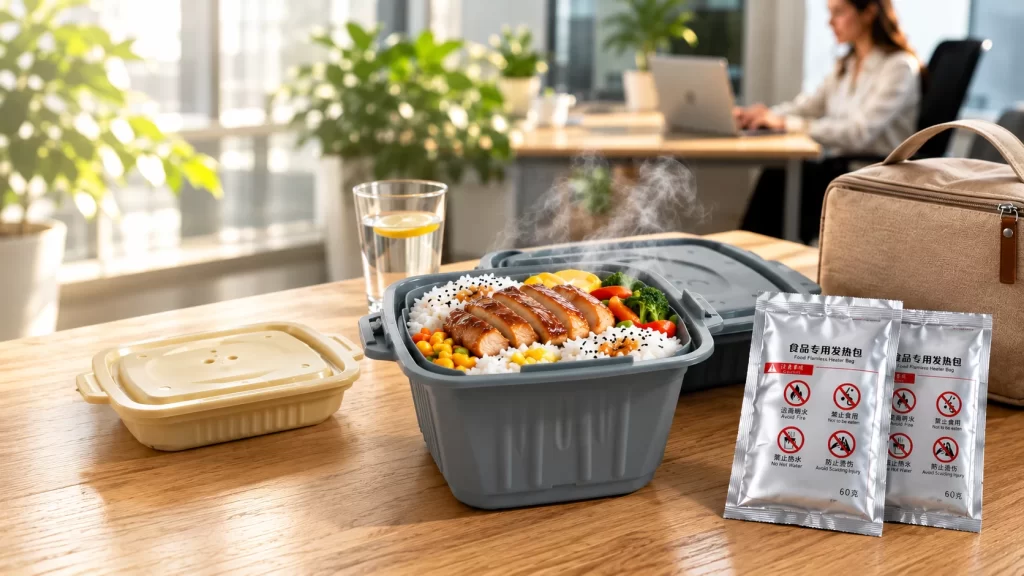
In a tray-style design, the heater is normally placed in a lower compartment while the prepared food sits in a separate upper tray.
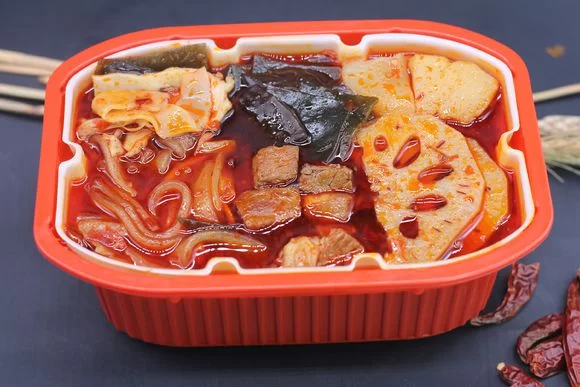
This format can work well for rice meals, noodles, hot-pot-style products, and other packaged meal concepts.
Custom Self-Heating Systems
Commercial food brands may require customized:
- Dimensions du chauffage
- Heater filling weight
- Outer heating bags
- Food containers
- Printed packaging
- Water indicators
- Instructions
- Private labeling
The final configuration should be tested with the actual food rather than treating each component independently.
What Should B2B Buyers Ask a Réchaud de rationnement sans flamme Supplier?
If you’re sourcing flameless ration heater bags for a commercial product, price should not be the only question.
Before requesting a quotation, prepare:
Food type: Rice, noodles, soup, stew, pasta, etc.
Food weight: Net weight per serving.
Package dimensions: Actual pouch or tray dimensions.
Starting temperature: Expected food temperature before heating.
Heating requirement: Desired heating performance and preparation time.
Packaging format: Pouch, bowl, tray, divided container, etc.
Destination market: Country or region where the finished product will be sold.
Customization: Branding, packaging, heater dimensions, instructions, etc.
Estimated quantity: Sample requirement and expected production volume.
Providing this information allows the supplier to recommend a configuration for meaningful sample testing rather than simply quoting a generic heating pack.
Custom Réchaud de rationnement sans flamme Bags for Food Brands
For ready-to-eat food manufacturers, a heating pack is only one component of the finished product.
The complete self-heating system may involve:
Prepared Food + Food Packaging + Heating Pack + Heating Bag/Container + Activation Water + Instructions
Changing one component can affect the others.
For example, increasing meal weight without changing the heating configuration may reduce heating performance.
Changing from a flat pouch to a deep tray can affect heat transfer.
Changing the heater without testing the actual meal may produce results that do not match the intended consumer experience.
Pour les projets de marques privées et de fabricants d'équipement d'origine (OEM), il convient donc, dans la mesure du possible, de réaliser des tests d'échantillons avec les aliments et les emballages réels.
FAQ À propos du réchauffeur de ration sans flamme Sacs
Qu'est-ce qu'un sac chauffant sans flamme pour rations ?
Un sac chauffant sans flamme est un système de chauffage portable qui utilise un élément chauffant activé par l'eau pour réchauffer les aliments préparés compatibles sans prise électrique ni flamme nue.
Les sachets chauffants sans flamme pour rations nécessitent-ils de l'électricité ?
Non. Les modèles classiques activés par l'eau génèrent de la chaleur par une réaction chimique exothermique plutôt que par l'électricité.
De quelle quantité d'eau un chauffe-rations sans flamme a-t-il besoin ?
Il n'existe pas de quantité universelle. La quantité d'eau nécessaire dépend du modèle et de la composition du chauffe-eau. Suivez les instructions fournies avec le produit.
Puis-je utiliser n'importe quel sachet alimentaire dans un sac auto-chauffant ?
Non. Le sachet alimentaire doit être compatible avec le système de chauffage et adapté aux conditions de chauffage prévues.
Les sachets chauffants sans flamme pour rations permettent-ils de cuire des aliments crus ?
Les réchauffeurs de rations portables classiques sont principalement conçus pour réchauffer des aliments préparés. Il ne faut pas supposer qu'ils permettent de cuire en toute sécurité des ingrédients crus, sauf si le système complet a été spécifiquement conçu et validé à cet effet.
Les sacs chauffants sans flamme pour aliments sont-ils réutilisables ?
La plupart des sachets chauffants portables sont conçus pour un seul cycle de chauffe. Rajouter de l'eau une fois la réaction terminée ne rétablit pas leur capacité de chauffe initiale.
Les réchauffeurs de rations sans flamme peuvent-ils être personnalisés ?
Pour les projets commerciaux, les fabricants peuvent proposer différentes dimensions de chauffage, différents poids de remplissage, différents emballages extérieurs, des instructions et des options de marque privée. La disponibilité dépend du fournisseur et du produit.
Quelles informations dois-je fournir lors d'une demande d'échantillons ?
Veuillez indiquer le type d'aliment, son poids net, les dimensions du sachet ou du plateau, la température initiale, l'objectif de chauffage prévu, le marché de destination et la quantité estimée de votre commande.
Trouvez le sac chauffant sans flamme adapté à votre produit alimentaire
A sac chauffant sans flamme pour rations offre une solution compacte pour réchauffer des plats préparés compatibles sans avoir recours à l'électricité ni à une flamme nue.
Mais la réussite des emballages alimentaires auto-chauffants ne se résume pas à placer un élément chauffant à côté d'un plat.
La puissance de chauffage doit correspondre à poids des aliments, dimensions de l'emballage, température initiale, durée de chauffage prévue et système d'emballage complet. Votre guide produit actuel souligne également que le poids, la forme, les conditions initiales, la quantité d'eau, l'emballage et les conditions ambiantes des aliments influencent tous les performances de chauffage.
Pour les acheteurs commerciaux, tester la combinaison réelle aliment-emballage est donc beaucoup plus précieux que de choisir un appareil de chauffage en se basant uniquement sur la taille de l'emballage ou sur une indication de température générique.
JOYTIDE Nous proposons des réchauffeurs de rations sans flamme et des solutions d'emballage auto-chauffantes pour les plats préparés compatibles. Les options de personnalisation incluent les dimensions du réchauffeur, le type d'emballage et les instructions pour les marques privées. Il est également recommandé, pour la personnalisation de vos produits existants, de commencer par le produit lui-même plutôt que de simplement augmenter la taille du réchauffeur.
Demander un échantillon ou un devis
Vous recherchez des sachets chauffants sans flamme pour vos produits alimentaires ?
Envoyez-nous votre type d'aliment, poids du repas, dimensions de l'emballage, température initiale, exigences de chauffage et quantité de commande estimée. Nous pouvons évaluer une configuration appropriée pour les tests d'échantillons.

 English
  German
  French
  Korean
  Japanese
  Russian
  Arabic
  Portuguese
  Spanish