
A hot meal is easy when there is a kitchen nearby. It becomes a little more complicated when you are camping, traveling, working outdoors, or simply somewhere without convenient access to electricity or cooking equipment.
That is where a self heating bag can be useful.
Instead of plugging in a device or lighting a burner, a water-activated self heating bag uses a compact heating pack to generate heat. Add the specified amount of water, position the food correctly, and the heat produced inside the system warms a compatible prepared meal.
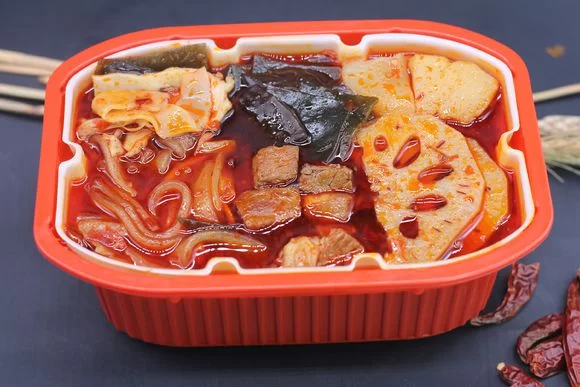
The idea is simple. Choosing the right system, however, deserves a little more thought.
Food weight, package shape, starting temperature, heater size, and even the way the food sits against the heating area can change the final result. For food brands and distributors, these details become even more important because the heater and the meal packaging need to work as one system.
Réponse rapide : Qu'est-ce qu'un Sac auto-chauffant?
A sac auto-chauffant pour aliments is a portable meal-heating system that uses a water-activated heating pack to warm compatible prepared food without electricity or an open flame.
The food remains inside its own sealed pouch or tray, while the heating material stays in a separate compartment. After the specified amount of water is added to the heater, an exothermic reaction releases heat, which is transferred to the food through the packaging.
Most portable self heating bags are designed for a single heating cycle.
For available heater sizes and configurations, you can explore JOYTIDE’s solutions de chauffage des aliments sans flamme.
How Does a Self Heating Bag Work?
At first glance, there is not much to a self heating bag. There is a heater pack, a bag or heating compartment, some water, and the meal.
The interesting part happens inside the heater.
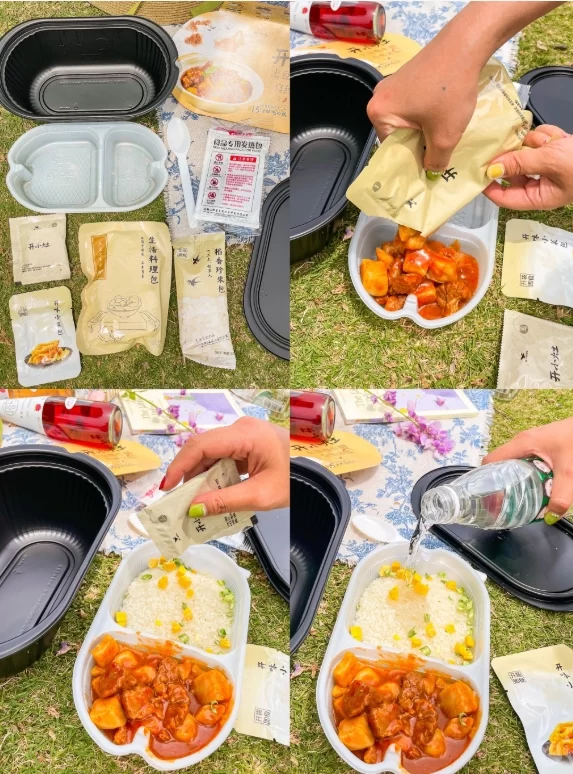
When the specified amount of water reaches the heating composition, an exothermic reaction begins. In simple terms, the reaction releases heat rather than absorbing it.
That heat is then transferred through the compatible packaging surrounding the prepared food.
Un système typique comprend :
| Composant | What It Does |
|---|---|
| compresse chauffante | Generates heat after water activation |
| Sac ou compartiment chauffant | Keeps the heater, water, and meal correctly positioned |
| Sealed food pouch or tray | Separates the food from the heating material |
| Protective heater packaging | Helps keep the unused heater dry before use |
| Instructions / water indicator | Shows how much water to add and how to position the system |
One point is worth emphasizing: the heating material should not come into direct contact with the food.
The heater and the food perform two different jobs and should remain physically separated throughout the heating process.
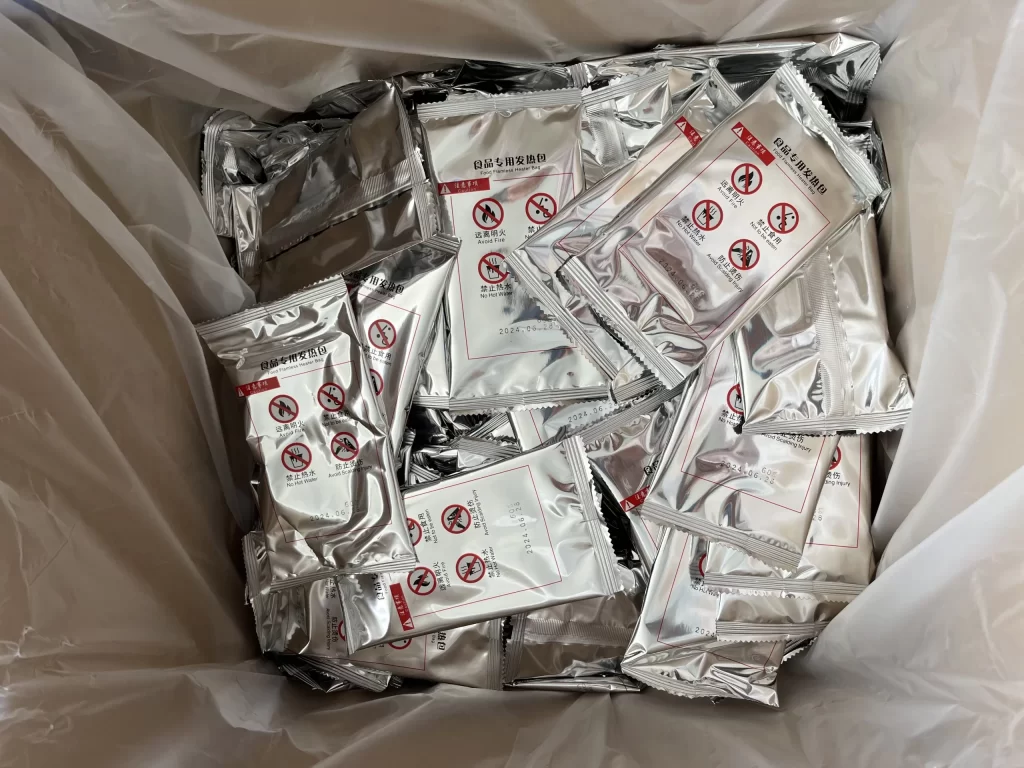
JOYTIDE magnesium-based heating pack is one example of a water-activated heater designed for compatible sealed ready-to-eat meals and self-heating food packaging.
Why Are Self Heating Bags Becoming Popular?
Convenience is the obvious answer, but it is not the whole story.
Most people do not want to carry extra cooking equipment just to warm one prepared meal. A self heating bag turns the heating component into part of the meal package itself.
There is no power cable to find, no stove to assemble, and no cookware to wash afterward.
That makes the format particularly practical for situations where a full kitchen simply is not available.
Camping and Outdoor Meals
After several hours outdoors, a cold meal is not always very appealing.
Un compact self heating food bag can provide a way to warm compatible prepared food without carrying a conventional stove. The heater itself takes up relatively little space, which makes it easier to integrate into a camping meal kit.
Local rules and product instructions should still be checked before use, and the heater should always be operated in the conditions specified by its manufacturer.
Road Trips and Travel
Long drives often mean choosing between cold packed food and whatever happens to be available at the next stop.
For prepared meals designed around a portable heating system, a self heating bag gives travelers another option.
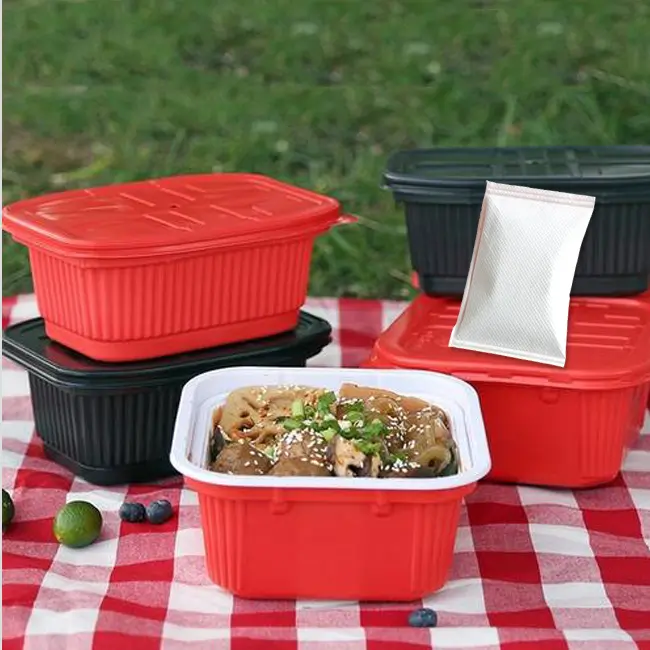
The important point is to stop somewhere suitable before activating the heater. It should be placed on a stable surface and used according to the supplied ventilation and handling instructions.
Travail en extérieur
Construction crews, field technicians, agricultural workers, delivery teams, and other people who spend long periods away from kitchen facilities may also need a practical way to warm prepared food.
A compact heating pack is easier to store than conventional cooking equipment and can be paired with an appropriate meal pouch or container.
Préparation du ménage
Power interruptions can make even a simple hot meal difficult.
A few compatible ready-to-eat foods and portable heating packs can provide an additional meal-heating option when normal kitchen appliances are temporarily unavailable.
The food and the heater should still be stored according to their own requirements. A heating bag does not change the shelf life or storage requirements of the food itself.
Ready-to-Eat Food Products
This is where self heating bags become particularly interesting for food manufacturers.
Instead of selling only a prepared meal, a brand can develop a complete meal system that combines food, packaging, heating components, instructions, and outer packaging.
Rice dishes, noodles, soups, stews, and other compatible prepared foods can all be evaluated for this type of system.
For tray-style products, JOYTIDE also offers self-heating food containers for hot pot, rice, noodles, soups, and prepared meals.
Self Heating Bag vs. Traditional Food Heating
A self heating bag is not intended to replace every cooking method.
It solves a much more specific problem: warming compatible prepared food when conventional heating equipment is inconvenient or unavailable.
| Heating Method | Electricity Needed | Open Flame | Portable | Best Suited For |
|---|---|---|---|---|
| Self heating bag | Non | Non | High | Compatible prepared meals |
| Microwave | Yes | Non | Low | Home, office, kitchen |
| Electric food warmer | Yes / battery | Non | Medium | Regular commuting and office use |
| Portable stove | No electricity | Yes | Medium | Outdoor cooking where permitted |
| eau chaude | Depends on preparation | Non | Medium | Foods designed for hot-water heating |
The biggest difference is that a water activated heating bag does not require an external heat source during normal use.
But there is an equally important limitation: most of these products are designed to plats chauds préparés, not to replace conventional cooking of raw ingredients.
What Foods Can Be Used with a Self Heating Bag?
There is no universal list that applies to every heater.
Compatibility depends on the heater specification and the complete food-packaging system.
Common products that may be suitable include:
- Repas de riz préparés
- Nouilles
- Soups and stews
- Pasta dishes
- Ready-to-eat meal pouches
- Prepared hot pot products
- Other packaged meals designed for reheating
The food itself is only one part of the equation.
Imagine 400 grams of rice in a shallow rectangular pouch and the same weight of thick stew in a deep container. The numbers on the label may look identical, but heat will not necessarily move through the two meals in the same way.
That is why food weight alone should never be used to select a heater.
How to Choose the Right Self Heating Bag
For an individual user buying a finished meal product, the simplest rule is to use the heating system supplied or recommended by the food manufacturer.
Commercial buyers need to go a little deeper.
1. Start with the Food
Before asking, “What size heater do I need?” start with the meal itself.
You should know:
- What type of food is being heated?
- What is the net weight of one serving?
- Is it rice, noodles, soup, stew, or another prepared food?
- Is the food packed in a pouch or tray?
- What are the package dimensions?
These details give a heater supplier something meaningful to work with.
2. Consider the Starting Temperature
The same meal can behave very differently depending on where it starts.
Food stored at normal room temperature does not require the same temperature rise as food that begins much colder.
Ambient conditions matter too.
A test carried out in a comfortable indoor environment may not reproduce the same result outdoors on a cold day.
For commercial projects, testing should therefore reflect the conditions in which customers are actually expected to use the product.
3. Look at the Package Shape
People often focus on heater weight and forget about geometry.
A thin pouch gives the food a relatively large contact area. A deep bowl places more food farther away from the heat source.
That difference can affect how quickly the center of the meal warms.
For this reason, heater selection and food-container design should ideally be evaluated together rather than as two unrelated purchasing decisions.
4. Check the Packaging Material
Not every plastic pouch or food container is designed to be heated.
Packaging should be appropriate for its intended food type and temperature conditions.
The U.S. Food and Drug Administration regulates substances that come into contact with food and emphasizes that food-contact materials need to be suitable under their intended conditions of use.
Commercial buyers should therefore confirm the suitability of the actual pouch, tray, or container used in the finished system rather than assuming that any food-grade material is automatically appropriate for heating.
5. Define What “Hot Enough” Actually Means
“Gets hot quickly” sounds good in a product description, but it is not a useful test specification.
A better heating test records:
- Initial food temperature
- Poids des aliments
- Dimensions de l'emballage
- Température ambiante
- Quantité d'eau d'activation
- Temps de chauffage
- Food temperature after defined intervals
- Temperature at different points in the meal
This gives both buyer and supplier something measurable to compare.
How to Use a Self Heating Bag
Exact instructions vary between products, so the directions supplied with the selected heater should always take priority.
A typical process looks something like this:
- Inspect the heater and food packaging before use.
- Read the supplied instructions and identify the correct water quantity.
- Place the sealed meal and heating pack in their designated positions.
- Add the specified amount of water to activate the heater.
- Position or close the outer heating bag as instructed without blocking its intended venting path.
- Place the system on a stable surface away from your face and skin.
- Allow the meal to heat for the recommended period.
- Open the system carefully and remove the hot food pouch or tray.
- Let the used heating pack cool before handling or disposal.
Steam, hot water, and hot surfaces can be produced during use, so the heater should never be treated like an ordinary cold food package.
Do not open the heating pack itself, consume the activation water, or allow heating material to mix with the food.
Un sac auto-chauffant permet-il de conserver les aliments à température ambiante ?
Non.
This is an important distinction.
A self heating bag heats food; it does not preserve food.
Whether a prepared meal can be stored at room temperature depends on how that food was processed and packaged.
For example, USDA explains that commercially processed foods in suitable retort packaging can be shelf-stable because of their processing and sealed packaging. A heater being included with a meal does not create that shelf stability.
If a food product says “Keep Refrigerated,” adding a self heating pack does not change that requirement.
Food storage instructions and heater storage instructions should therefore be treated separately.
Self Heating Bags for Food Brands: What Should Be Customized?
For a retail product, the heater is rarely an isolated component.
It needs to fit the food, packaging, instructions, and overall consumer experience.
Depending on the project, customization may include:
| Item | Possible Customization |
|---|---|
| Chauffage | Weight, dimensions, heating configuration |
| Heating bag | Size and structure |
| Food container | Shape, dimensions, compartments |
| Instructions | Language, activation steps, warnings |
| Image de marque | Printed outer packaging and private label |
| Packing | Individual packing, kits, carton configuration |
JOYTIDE also supplies aluminum water-activated heating packs with different heater weights, dimensions, packaging options, and configurations for compatible meal-heating systems.
The best place to start a custom project is not with a catalog number. It is with the actual meal.
Quelles informations devez-vous transmettre à un fournisseur de sacs auto-chauffants ?
A message saying “Please quote your self heating bag” will usually lead to several rounds of questions.
A more useful inquiry includes:
| Information | Example |
|---|---|
| Type d'aliment | Rice with vegetables |
| Poids net des aliments | 350 g |
| Conditionnement | Sealed rectangular pouch |
| Dimensions de l'emballage | Length × width × thickness |
| température initiale | Approximate expected range |
| Intended use | Retail self-heating meal |
| Résultat cible | Desired serving temperature / heating time |
| Quantité | Quantité d'échantillons et commande en gros estimée |
| Destination | Country or market |
| Personnalisation | Sac imprimé, instructions, marque privée |
With this information, a supplier can evaluate the meal and recommend a configuration for testing rather than simply guessing from the requested heater size.
For custom heater specifications, packaging, or commercial orders, you can contacter JOYTIDE with your meal weight, package dimensions, intended application, destination market, and estimated quantity.
Testing Matters More Than the Specification Sheet
A specification sheet is useful, but the final meal is what matters.
Two heaters that look similar on paper may perform differently once they are paired with different foods and packaging.
For a commercial self-heating food project, sample testing should use the actual food, actual packaging, and realistic starting conditions whenever possible.
Watch more than the peak heater temperature.
Ask instead:
Did the center of the food warm adequately?
Was the temperature reasonably distributed?
Was the amount of activation water easy for the user to understand?
Was the package comfortable to handle afterward?
Could someone seeing the product for the first time follow the instructions correctly?
Those questions are much closer to the real consumer experience.
Self Heating Bag Safety and Packaging Considerations
A well-designed self heating meal system keeps the heating component physically separate from the food.
The packaging also has to perform under the temperatures and conditions it will experience during use.
The FDA notes that substances used in food-contact materials are evaluated according to their intended conditions of use. USDA similarly advises against heating food in packaging that was intended only for cold storage.
For commercial products, this means that “food grade” by itself is not a complete answer.
The actual food-contact package, temperature conditions, heater configuration, and intended use should all be considered.
Users should also follow a few straightforward rules:
- Use only the specified amount of activation water.
- Keep the heating pack intact.
- Do not allow heating contents to contact food.
- Veillez à ce que le conduit d'évacuation prévu reste dégagé.
- Handle hot water, steam, packaging, and food carefully.
- Use the product only as directed by its manufacturer.
- Allow the heater to cool before disposal.
Is a Self Heating Bag Right for Your Product?
For the right prepared food, it can turn a simple packaged meal into a much more complete product.
But the heater should not be selected in isolation.
The best results come from treating the food + heater + container + instructions + outer packaging as one system.
Commencez par le repas.
Know its weight, dimensions, packaging, starting conditions, and desired heating result. Then evaluate a heater configuration and test it with the real product.
That approach takes a little more work at the beginning, but it is far more useful than choosing a heating pack based only on price or size.
JOYTIDE supplies water-activated heating packs and compatible self-heating food packaging solutions for prepared meals, outdoor food, travel meals, and private-label food products.
For a new project, send the food type, net weight, package dimensions, target heating result, estimated quantity, and destination market. A suitable configuration can then be evaluated before moving to bulk production.
FAQ
What is a self heating bag?
A self heating bag is a portable food-heating system that uses a water-activated heater to generate heat. It can warm compatible prepared meals without electricity or an open flame.
Comment fonctionne un sac auto-chauffant pour aliments ?
Water activates a heating composition inside a separate heater pack. The resulting exothermic reaction generates heat, which transfers through compatible packaging to warm the prepared food.
Un sac auto-chauffant a-t-il besoin d'électricité ?
No. Water-activated self heating bags generate heat through a chemical reaction and do not require an electrical outlet during normal operation.
How much water does a self heating bag need?
There is no universal amount. Water quantity depends on the heater formulation, weight, dimensions, and system design. Always use the amount specified for the selected heater.
How long does a self heating bag take to heat food?
Heating time varies with the heater, meal weight, food thickness, starting temperature, packaging, and ambient conditions. Use the manufacturer’s instructions and test data for the specific meal-heating system.
What food can be heated in a self heating bag?
Depending on the system, compatible prepared rice, noodles, soups, stews, pasta dishes, hot pot products, and other ready-to-eat meals may be heated. The food and packaging should be evaluated with the selected heater.
Un sac auto-chauffant peut-il cuire des aliments crus ?
Les sacs auto-chauffants portables sont généralement conçus pour réchauffer des aliments préparés compatibles. Ils ne doivent pas être utilisés pour cuire des ingrédients crus, sauf si le produit a été spécifiquement conçu et validé à cet effet.
Un sac auto-chauffant peut-il être réutilisé ?
La plupart des sachets chauffants activés par l'eau sont conçus pour un seul cycle de chauffage. Une fois la réaction de chauffage terminée, la capacité de chauffage initiale ne peut pas être rétablie simplement en ajoutant de l'eau.
L'élément chauffant est-il en contact avec les aliments ?
Cela ne devrait pas être le cas. Dans un système alimentaire auto-chauffant correctement configuré, le sachet chauffant reste physiquement séparé des aliments à l'intérieur de son compartiment ou sachet chauffant désigné.
Les sachets auto-chauffants peuvent-ils être personnalisés pour les marques alimentaires ?
Oui. Selon le produit et les exigences de la commande, les dimensions, le poids et les emballages extérieurs du dispositif de chauffage, les instructions imprimées, l'emballage de marque privée, les contenants et les modalités d'emballage peuvent être personnalisés.
Quelles informations dois-je fournir pour demander un devis ?
Veuillez indiquer le type d'aliment, son poids net, les dimensions du sachet ou du contenant, la température initiale prévue, le résultat de chauffage souhaité, le marché de destination, la quantité commandée estimée et toutes les exigences en matière d'emballage ou de marque.

 English
  German
  French
  Korean
  Japanese
  Russian
  Arabic
  Portuguese
  Spanish