How Should a Food Pouch Fit Inside a Self-Heating Bag?
A food pouch should fit in the arrangement the heating system was designed to use. It should not need force, improvised folds, or a change to the heater position just to get it into the bag. Equally, a loose-looking assembly is not automatically wrong if the specified design controls placement another way.
Notre self-heating bag selection guide covers the broader product choice. This article focuses on checking fit through the complete user sequence: insertion, positioning, heating, and removal.
Réponse rapide
The filled food pouch should enter the bag without excessive force, remain in its specified position relative to the heater, preserve the intended venting, and be removable as instructed after heating. Confirm fit using actual components. A visual judgment of “tight” or “loose” is not a substitute for the supplier’s arrangement and a sample trial.
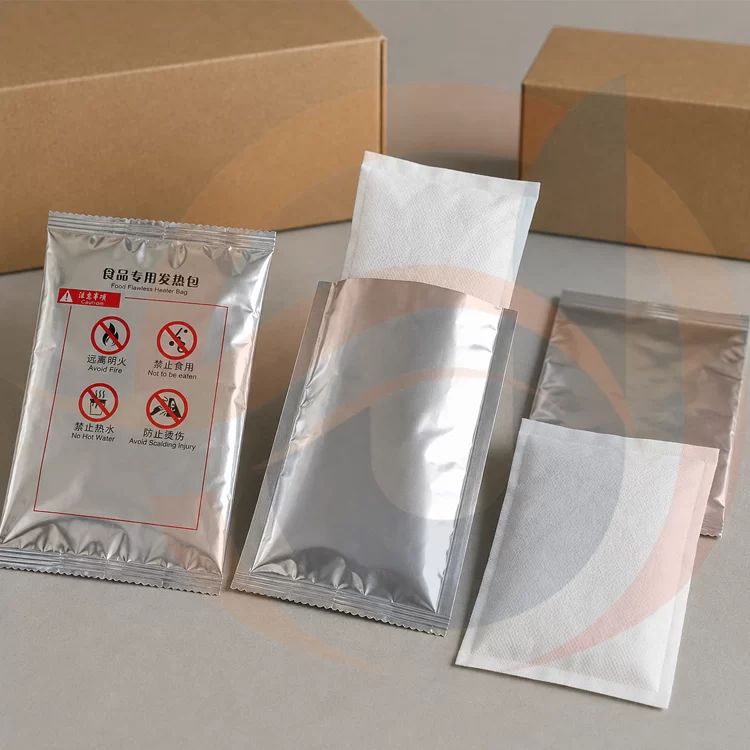
Website product illustration showing heater wrappers and inner pouches. Components shown are not an order packing list.
Check the Opening Before the Internal Space
A bag may have enough space in its body but a narrow opening that makes assembly difficult. Test the filled food pouch, not only its empty packaging. Include the heater if the instructions require it to be present during insertion.
Observe whether the user needs to squeeze the food, catch a pouch corner on a seam, or bend the heater. If so, stop the fit check and review the dimensions or assembly sequence with the supplier.
Le bag-size guide explains which measurements to request. This fit check then tests whether those dimensions work in practice.
Preserve the Specified Heater Position
Heat transfer depends partly on how the food and heater are arranged. Do not assume that the heater can sit anywhere inside the bag. Use the supplied diagram or request one if the positioning is unclear.
Check whether the meal stays in the intended position when the top is arranged as instructed and the bag is placed in its operating orientation. If it slides away or folds over, record the observation for a design review.
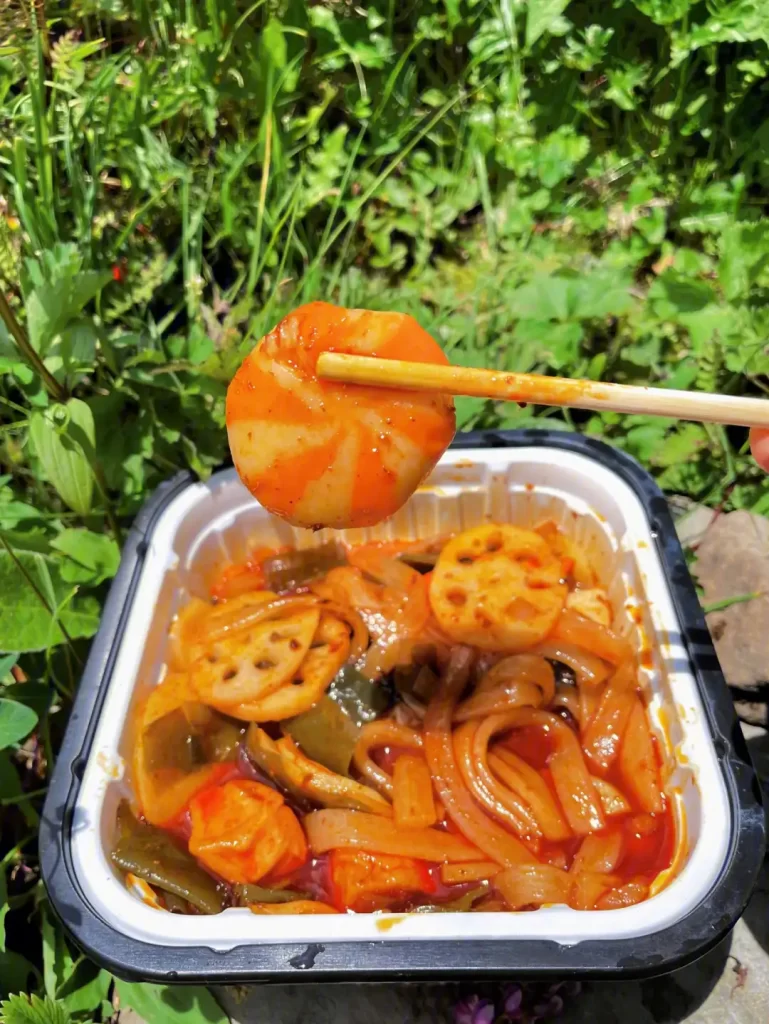
Do not tape the components together, add weights, or introduce improvised spacers unless those features are part of a validated system.
Start with an unactivated check, then evaluate the specified heating cycle. Editorial illustration; not a product specification or operating diagram.
Use a Four-Stage Fit Review
| Stage | What a reviewer should observe |
|---|---|
| Insertion | Components pass through the opening without damage or excessive force |
| Positioning | The meal and heater reach the specified arrangement |
| Operation | The intended venting and orientation remain available |
| Removal | The meal can be removed by the instructed method without struggling with the bag |
Start with an unactivated check. Conduct any heating trial according to the model’s instructions and appropriate handling procedures. Keep the trial setup separate from food intended for normal consumption if measurement tools could compromise the package.
Watch for Changes Caused by Filled Shape
A pouch’s shape can vary with its contents. A rice meal may form a thick area at one end, while a sauce pouch may redistribute its contents more easily. Test representative filled samples rather than choosing only the neatest example.
For multi-part meals, review multiple-pouch compatibility. The first pouch fitting well does not establish that the complete kit fits once the second component is added.
Avoid Two Common Shortcuts
Selecting only by outside dimensions: bag seals and opening geometry can reduce usable space. Ask for internal measurements and validate them with samples.
Making the assembly tighter to “improve heating”: tighter is not automatically better. Excessive compression may distort packaging or the intended liquid and venting paths. Performance should be established by testing the specified arrangement.
Fit also does not establish material suitability. Packaging must suit its intended heat exposure; the Conditions d'utilisation de référence de la FDA provides background on that distinction.
Document the Accepted Arrangement
Keep photographs of the approved assembly, the component model numbers, and the relevant drawing revision. Include a clear view of the opening and top arrangement. This gives the packaging team and instruction writer the same reference.
If the food pouch or bag changes later, repeat the relevant fit and heating checks. A small dimensional change can affect insertion or removal even when the product name remains unchanged.
FAQ
Should the meal be tightly squeezed against the heater?
Follow the system’s specified arrangement. Do not add pressure or force a tight fit based on a general assumption about heat transfer.
Can I fold the meal pouch to make it fit?
Do not improvise a fold that is not permitted by the system instructions. It can change food thickness and handling. Choose a suitable bag instead.
Is a fit check enough before ordering?
No. Confirm heating performance, materials, handling, and instructions as well. Fit is one part of evaluating the complete system.
Send JOYTIDE your pouch measurements and assembly photos to discuss a suitable fit evaluation.