
A flameless ration heater is a portable heating pack used to warm a sealed ready-to-eat meal without electricity or an open flame. It is activated with a specified amount of water, which starts a heat-producing reaction inside the heater.
That’s the simplest definition.
In practice, a flameless ration heater is part of a larger meal-heating system. The food stays inside its own pouch, tray, or container while the heater remains in a separate compartment.
The idea is straightforward:
Add water → activate the heater → heat is generated → heat transfers through the food package → the meal becomes warm.
The term “ration heater” comes from its association with packaged ready-to-eat meals, but the underlying heating technology can also be used for civilian food products such as outdoor meals, travel food, self-heating meals, and other prepared-food applications.
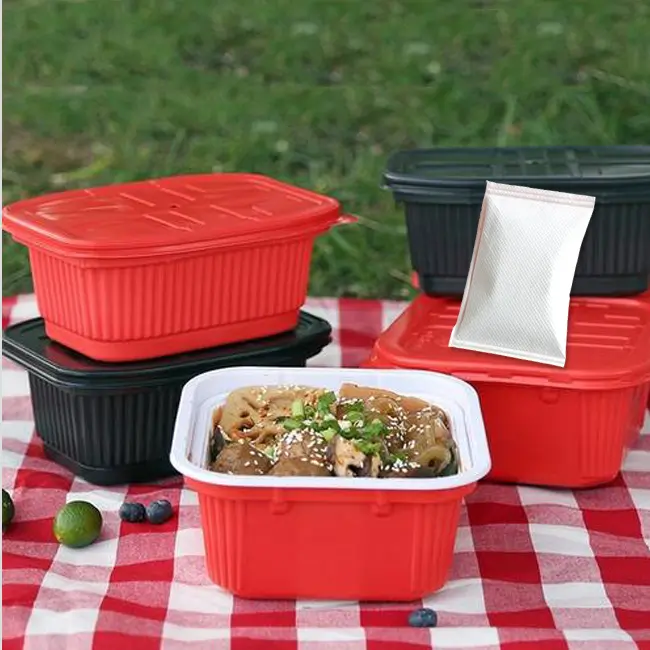
For a broader look at the available product formats, see JOYTIDE’s flammenlose Rationserhitzerlösungen.
Wie funktioniert ein flammenloser Rationserhitzer?
A flameless ration heater works by using water to activate a heating material inside a separate heater pack. The reaction produces heat, and that heat transfers through compatible food packaging to warm the prepared meal.
Unlike an electric heater, it does not need a power outlet.
Unlike a gas stove, it does not use an open burner.
The heater is designed so that its heating material stays separate from the food.
Depending on the design, the heating material is enclosed inside an inner pouch and protected by an outer bag. JOYTIDE’s flammenloser Rationserhitzer auf Magnesiumbasis is one example of a water-activated heater format developed for compatible ready-to-eat meals.
The exact heater formulation, pack size, activation method, and heating performance can vary between models.
Why Is It Called “Flameless”?
It is called flameless because the heater generates heat without burning fuel in an open flame. The heating reaction occurs inside the heater pack after water is added.
That distinction is useful.
“Flameless” does not mean “cold.”
The purpose of the heater is still to generate heat, and users may encounter hot surfaces, hot water, or vapor during operation.
So the term describes the heat source, not the absence of heat.
Does a Flameless Ration Heater Need Electricity?
No. A water-activated flameless ration heater normally does not require electricity during use. Adding the specified amount of water activates the heater and starts the heat-producing reaction.
That’s one of the main reasons these systems are useful for portable meals.
They can be incorporated into prepared food products for situations where a microwave or conventional kitchen is inconvenient.
Civilian applications may include:
- Camping
- Wandern
- Roadtrips
- Picnics
- Arbeit im Freien
- Travel meals
- Ready-to-eat food products
- Household preparedness
A flameless heater is not intended to replace a full cooking setup in every situation.
Its main job is simpler:
warm a prepared meal.
How Much Water Does a Flameless Ration Heater Need?
The amount of water depends on the specific heater model, formulation, and activation design. There is no single water volume that applies to every flameless ration heater.
This is one of the most important things to understand.
Don’t assume that two heaters with similar dimensions require the same amount of water.
Don’t assume that more water will automatically produce more heat.
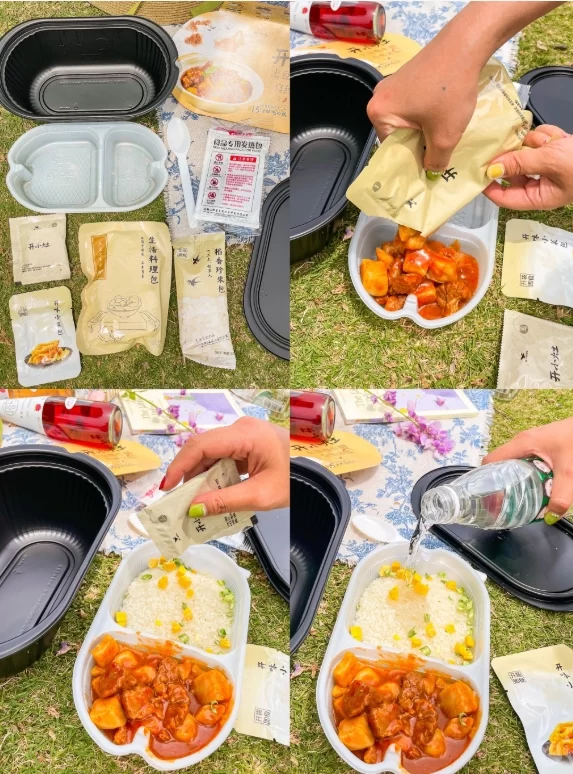
And don’t copy the activation instructions from a different product.
The manufacturer’s specified amount should be followed for the selected heater.
JOYTIDE's flameless heater FAQ explains that the required water volume depends on the heater model and that users should use only the specified amount.
For a consumer product, a marked water-fill line can make activation much easier.
How Long Does a Flameless Ration Heater Take to Heat a Meal?
Heating time varies with the heater, meal weight, starting temperature, food thickness, packaging, activation water, and ambient conditions. There is no single heating time that applies to every meal.
For example, a 250 g rice pouch at room temperature and a 500 g soup container taken from refrigeration are very different heating jobs.
That is why heating claims should always be considered together with their test conditions.
A useful development test can record:
| Test Condition | Information |
|---|---|
| Meal | Exact food product |
| Lebensmittelgewicht | Nettogewicht pro Portion |
| Starttemperatur | Vor der Aktivierung |
| Heizung | Exact model |
| Wasser | Aktivierungsmenge |
| Paket | Beutel, Schale oder Behälter |
| Aufheizzeit | Definierte Intervalle |
| Lebensmitteltemperatur | Mehrere Messpunkte |
| Endergebnis | Gesamtheizleistung |
For commercial products, this is much more meaningful than simply saying “ready in 10 minutes.”
What Temperature Does a Flameless Ration Heater Reach?
The heater temperature and the food temperature are not the same thing. A heating pack can become hotter than the final meal because heat is transferred through packaging and some heat is lost to the surrounding environment.
This is why the maximum temperature of the heater isn’t always the most useful specification.
Suppose the heater sits underneath a thick meal.
The bottom portion may become hot first.
The center of the food may take longer.
So for product development, it makes more sense to measure the actual food temperature and, where useful, check multiple locations in the meal.
The question isn’t simply:
“How hot can the heater get?”
It is:
“What temperature can the actual meal reach under defined conditions?”
What Foods Can a Flameless Ration Heater Warm?
A compatible flameless ration heater can be used to warm prepared foods such as rice, noodles, soups, stews, pasta, hot pot products, and other sealed ready-to-eat meals. Compatibility depends on the food, package, heater, and target heating result.
Food weight alone does not determine compatibility.
Consider two 400 g meals.
One is a flat rice pouch.
The other is a deep soup container.
The meals weigh the same, but the way heat moves through them is different.
Food thickness, package shape, starting temperature, and distance from the heater can all affect the result.
For meals that work better in a tray-style system, JOYTIDE also offers selbsterhitzende Lebensmittelbehälter und Mahlzeitenboxen for compatible rice, noodles, soups, hot pot, and prepared meals.
Kann ein flammenloser Lebensmittelwärmer gekühlte Lebensmittel erwärmen?
A suitable flameless ration heater may be able to warm refrigerated prepared food, but the lower starting temperature increases the heating requirement. The complete food-heating system should be tested from the temperature expected during actual use.
This matters especially for commercial food products.
If a meal is designed to go directly from refrigerated storage into the heating system, test it that way.
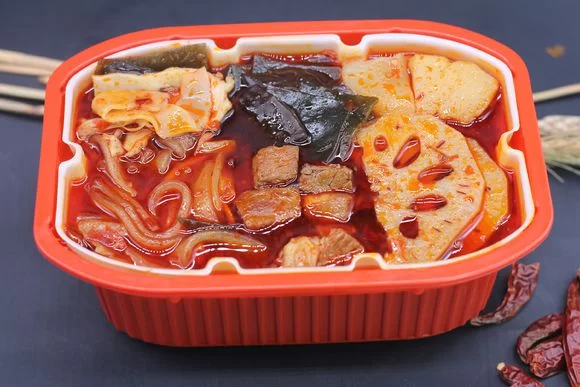
Don’t test a room-temperature meal and assume it represents refrigerated performance.
There is also a packaging question.
The U.S. Food and Drug Administration identifies different conditions of use for food-contact substances, including refrigerated or frozen ready-prepared foods intended to be reheated in their containers at the time of use. The FDA’s Lebensmittelarten und Verwendungsbedingungen für Lebensmittelkontaktmaterialien provides a useful reference when evaluating a food package for a reheating application.
So for a commercial product, think about the meal as one complete system:
food + packaging + heater + starting temperature
Does the Heating Material Touch the Food?
No. In a properly designed flameless meal-heating system, the heating material stays inside its own heater pack while the food remains inside a separate sealed pouch, tray, or container.
The typical structure is:
Heizmaterial → Heizkissen → Lebensmittelverpackung → Lebensmittel
The purpose of the packaging is not only to hold the meal.
It also creates the separation between the food and heating component while allowing heat to transfer.
For commercial food products, this is why the food package should be evaluated as part of the heating system.
The FDA’s consumer information on Lebensmittelverpackungen und andere Stoffe, die mit Lebensmitteln in Berührung kommen explains the broader food-contact framework and the role of materials used in food packaging.
Is a Flameless Ration Heater Safe?
A flameless ration heater is designed to warm food without an open flame, but it still produces heat. Users should follow the specific operating and safety instructions supplied with the heater.
“Flameless” describes how the heater produces heat.
It does not mean the system remains cool during use.
Zu den grundlegenden Vorsichtsmaßnahmen gehören:
- Verwenden Sie ausschließlich das angegebene Aktivierungswasser.
- Keep the heating material separate from the food.
- Never open or consume the heater material.
- Do not drink the activation water.
- Keep the system on a stable surface.
- Keep any required ventilation path clear.
- Avoid unnecessary contact with the activated heating area.
- Handle the heated meal carefully.
- Das gebrauchte Heizgerät muss vor der Entsorgung abkühlen.
Different heater designs can have different operating instructions, so the instructions for the selected model should take priority.
Can You Use Hot Water to Activate It?
Do not assume that hot water will make a flameless ration heater work faster or better. Unless the manufacturer specifically instructs you to use hot water, follow the recommended activation method for that heater.
The water quantity and activation conditions are part of the heater’s design.
Changing them can change the way the heating system operates.
For product development, the same activation method should also be used across sample tests so that the results can be compared consistently.
Kann ein flammenloser Rationserhitzer rohe Lebensmittel garen?
A typical flameless ration heater is designed to warm prepared food rather than cook raw ingredients. It should not be assumed to replace conventional cooking equipment unless the complete system has specifically been designed and validated for that purpose.
There’s a significant difference between:
warming prepared food
Und
cooking raw food.
A ready-to-eat rice meal, noodle dish, soup, or stew can be developed around a suitable heater.
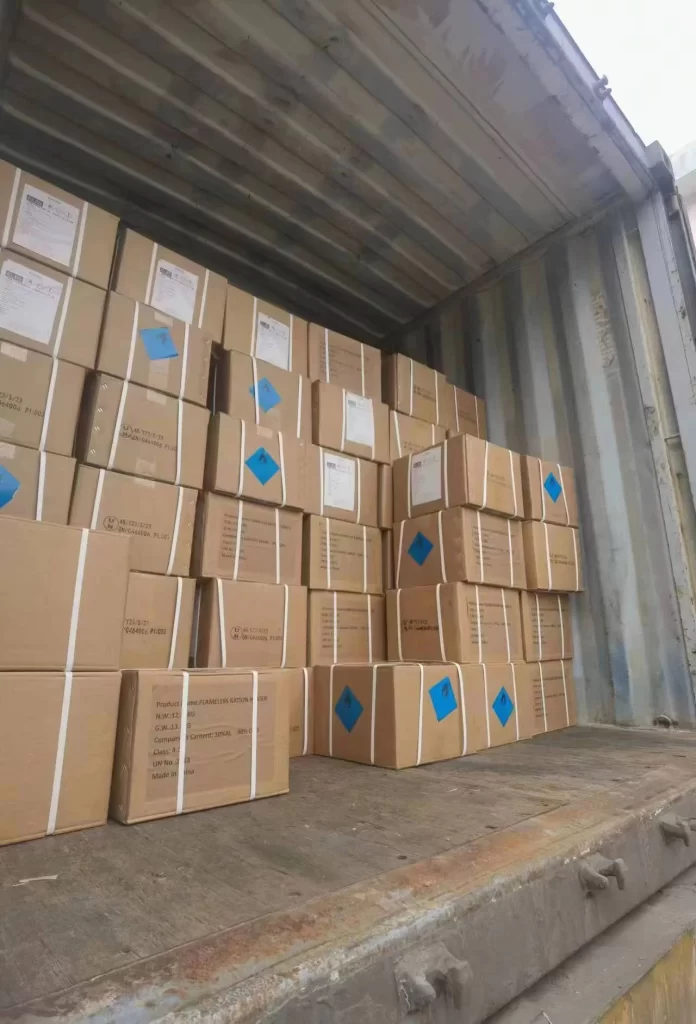
Raw meat and other uncooked ingredients require controlled cooking conditions throughout the food.
For most portable food-heating applications, the intended process is:
prepared meal → warmed meal
Can a Flameless Ration Heater Be Reused?
Most water-activated flameless heater packs are designed for a single heating cycle. Once the heating reaction is complete, adding water again does not restore the original heating capacity.
That means the heater is normally a consumable part of the meal system.
After use, it should be allowed to cool and then handled according to the product’s disposal instructions.
For food manufacturers, each prepared meal will typically require its own compatible heater pack.
Macht ein flammenloser Rationserhitzer Lebensmittel haltbar?
No. A flameless ration heater provides heat; it does not preserve the food or change its storage requirements. Shelf stability depends on the food’s processing, packaging, and storage conditions.
This is an important distinction when developing self-heating food.
A refrigerated meal does not become shelf-stable because a heating pack is placed next to it.
USDA explains that shelf-stable foods can depend on specific processing and packaging methods. Its [Shelf-Stable Food Safety guidance] includes retort and aseptic packaging as examples of food-processing and packaging approaches used for shelf-stable products.
USDA also describes a retort pouch as a flexible package that undergoes commercial thermal processing to make the contents shelf-stable at room temperature.
So the two functions should be kept separate:
Food processing determines storage.
The heater provides heat.
What Is the Difference Between a Flameless Ration Heater and a Food Heating Pack?
A flameless ration heater usually refers to the packaged heating component or heating system used with a ready-to-eat meal, while a food heating pack more generally refers to the water-activated heater itself. The terminology can overlap depending on the product.
This distinction becomes useful when you’re sourcing components.
You may already have a finished meal pouch and only need a heating pack.
Or you may need a complete system with:
outer bag + heater + meal positioning + instructions
JOYTIDE offers Aluminium-Heizkissen Und magnesium-based flameless heaters for different compatible food-heating applications.
What Should I Consider When Choosing a Flameless Ration Heater?
The right flameless ration heater should be selected according to the meal, package, starting temperature, target heating result, and intended use. Heater weight alone is not enough to determine whether a configuration is suitable.
Start with the food.
Meal Weight
Tell the supplier the actual net food weight per serving.
Food Type
Rice, noodles, soup, stew, pasta, hot pot, or another prepared product?
Paket
Flexible pouch, tray, bowl, or divided container?
Package Dimensions
Actual dimensions are much more useful than a general description.
Starting Temperature
Room temperature and refrigerated food should be treated as different test conditions.
Target Heating Result
Define what temperature or serving result you want.
Heating Time
Specify your desired preparation window.
Menge
Provide both your sample requirement and estimated production quantity.
Destination Market
Tell the supplier where the product will be sold.
Anpassung
Mention printed instructions, outer packaging, private-label requirements, or special packing needs.
JOYTIDE's Warum JOYTIDE wählen? page provides additional information about customization, sample evaluation, packaging options, and support for food brands and meal manufacturers.
Should I Choose the Heaviest Heater?
Not necessarily. A heavier heater may have greater heating capacity, but it is not automatically the right choice for every meal. The useful heater is the one that provides the required result with the intended food and packaging.
Consider three heaters:
40 g
50 g
60 g
The largest isn’t automatically the best.
A heavier heater may add capacity that your meal doesn’t need.
A smaller heater may not provide enough energy.
The actual answer comes from testing.
A useful process is:
Define the meal → select a candidate heater → test → measure → adjust → confirm
That process is much more informative than choosing by heater weight alone.
What Should a Food Brand Test Before Bulk Production?
Before bulk production, test the actual meal, actual packaging, and proposed heater together under realistic conditions. Check activation, heating time, food temperature, temperature distribution, packaging performance, handling, instructions, and consistency.
A practical test can include:
| Test Area | Was zu überprüfen ist |
|---|---|
| Activation | Is the water quantity easy to understand? |
| Aufheizzeit | Does the meal warm within the intended period? |
| Lebensmitteltemperatur | Does it reach the target result? |
| Heat distribution | Is the center warm enough? |
| Verpackung | Does the package tolerate heating? |
| Handling | Is the meal easy to remove? |
| Anweisungen | Can a first-time user understand them? |
| Consistency | Do multiple samples perform similarly? |
Testing an empty container or a cup of water may help evaluate basic heater behavior, but it doesn’t replace testing the actual meal.
Why Is the Food Package Important?
The food package is part of the heating system because its material, shape, thickness, and intended conditions of use can affect both heat transfer and the way the meal behaves during heating.
A thin pouch and a deep tray create different thermal conditions.
The FDA’s conditions-of-use reference includes refrigerated or frozen ready-prepared foods intended to be reheated in their containers, showing why the intended heating condition matters when evaluating food-contact materials.
For a commercial self-heating meal, don’t stop at:
“Ist das lebensmittelgeeignet?”
A better question is:
“Is this package appropriate for this food under the intended heating conditions?”
That’s the question that matters during product development.
What Information Should I Send a Supplier?
Provide the food type, portion weight, package dimensions, starting temperature, target heating result, preferred heating time, destination market, order quantity, and customization requirements.
A simple inquiry such as:
“We need a flameless ration heater for a 400 g prepared rice meal in a flexible pouch.”
is a useful starting point, but adding the package size and target heating result makes it much easier to evaluate.
Useful information includes:
| Projektdetails | Beispiel |
|---|---|
| Essen | Prepared rice meal |
| Weight | 400 g |
| Paket | Flexibler Beutel |
| Abmessungen | Actual pouch dimensions |
| Starttemperatur | Room temperature |
| Target | Defined serving temperature |
| Aufheizzeit | Preferred preparation period |
| Markt | Zielland |
| Menge | Muster + geschätzte Großbestellung |
| Anpassung | Printing / private label / instructions |
For a more detailed request, you can also send food photos, packaging drawings, or an existing sample.
The JOYTIDE flameless heater FAQ provides a similar list of information for quotation and sample evaluation.
Can a Flameless Ration Heater Be Customized?
Yes. Commercial flameless ration heater projects may support different heater weights, dimensions, heating capacities, outer bags, printed instructions, private-label packaging, and bulk packing arrangements, depending on the product and project requirements.
Customization often starts with the meal.
A practical development order is:
Food → food package → heater → heating bag → instructions → outer packaging
This reduces the chance of creating a heater or bag that later doesn’t fit the actual meal.
For commercial buyers, JOYTIDE’s custom flameless heating solutions can be evaluated around the actual food product and packaging requirements.
When Should You Request Samples?
Request samples before bulk production when you are introducing a new meal, changing package dimensions, using refrigerated food, or establishing a new heating target. Samples help confirm the heater and meal work together as intended.
A sample is useful for answering practical questions:
Does the meal heat evenly enough?
Does the center warm sufficiently?
Does the pouch or tray remain intact?
Is the activation process easy to understand?
Is the heating time acceptable?
Do multiple samples behave consistently?
Those answers are more valuable than a specification sheet by itself.
What Makes a Good Flameless Ration Heater?
A good flameless ration heater is one that matches the meal, activates consistently, fits the packaging, provides the required heating result, and can be used correctly without unnecessary complexity.
The hottest heater isn’t automatically the right heater.
The cheapest heater isn’t automatically the most suitable one.
For a finished food product, the important balance is:
Compatibility + Heating Performance + Packaging + User Experience + Consistency
That’s what the customer actually experiences.
Häufig gestellte Fragen
What is a flameless ration heater?
A flameless ration heater is a portable water-activated heating pack used to warm a sealed ready-to-eat meal without electricity or an open flame.
Wie funktioniert ein flammenloser Rationserhitzer?
Water activates the heating material inside the heater pack, creating an exothermic reaction that produces heat and warms the meal through compatible packaging.
Why is it called flameless?
It generates heat without an open flame or burner.
Benötigt ein flammenloser Rationserhitzer Strom?
Nein. Wasseraktivierte Modelle erzeugen im normalen Gebrauch auch ohne Steckdose Wärme.
How much water does it need?
The required amount depends on the heater model and formulation. Use only the quantity specified in the product instructions.
Wie lange dauert es, Speisen zu erhitzen?
Heating time depends on the heater, food weight, starting temperature, packaging, food thickness, water quantity, and ambient conditions.
Welche Speisen kann es erwärmen?
Geeignete Fertiggerichte können Reis, Nudeln, Suppen, Eintöpfe, Pasta, Hot-Pot-Gerichte und andere verzehrfertige Mahlzeiten umfassen.
Kann es gekühlte Speisen erwärmen?
Eine geeignete Konfiguration kann möglicherweise gekühlte Lebensmittel erwärmen, jedoch erhöht die niedrigere Ausgangstemperatur den Heizbedarf und sollte in die Tests einbezogen werden.
Kommt das Heizmaterial mit den Lebensmitteln in Berührung?
Nein. In einem ordnungsgemäß konfigurierten System bleibt das Heizmaterial in seiner eigenen Verpackung und ist physisch von den Lebensmitteln getrennt.
Ist ein flammenloser Rationserhitzer sicher?
Das Heizgerät sollte gemäß seiner spezifischen Bedienungsanleitung verwendet werden. “Flammenlos” bedeutet, dass das System keine offene Flamme benötigt, aber das Heizgerät und das umgebende Wasser können sich erhitzen.
Kann es rohe Lebensmittel zubereiten?
Typische Systeme sind eher zum Erwärmen von zubereiteten Speisen als zum Garen von rohen Zutaten ausgelegt.
Kann das Heizgerät wiederverwendet werden?
Die meisten wasseraktivierten Heizkissen sind für einen Heizzyklus ausgelegt.
Macht die Heizung Lebensmittel haltbar?
Nein. Die Haltbarkeit von Lebensmitteln hängt von der Lebensmittelverarbeitung, der Verpackung und den Lagerbedingungen ab.
Lässt es sich individuell anpassen?
Bei kommerziellen Projekten können verschiedene Heizgerätegrößen, Heizleistungen, Beutel, Verpackungen, gedruckte Anleitungen und Private-Label-Optionen zum Einsatz kommen.
Kann ich Muster anfordern?
Ja. Anhand von Mustern können die Heizleistung, die Lebensmittelverträglichkeit, die Verpackung, die Aktivierung und das gesamte Benutzererlebnis bewertet werden.
Fazit
A flammenloser Rationserhitzer ist im Prinzip nicht kompliziert.
Es handelt sich schlicht um ein tragbares Heizsystem, das mit einem wasseraktivierten Heizelement eine geeignete, zubereitete Mahlzeit ohne Strom oder offene Flamme erwärmt.
Die Schwierigkeit besteht darin, die richtige Konfiguration auszuwählen.
Lebensmittelgewicht, Lebensmittelart, Verpackungsabmessungen, Ausgangstemperatur, angestrebtes Erwärmungsergebnis und Aktivierungsmethode beeinflussen die Leistung.
Der beste Ausgangspunkt ist also nicht das Datenblatt der Heizung.
Beginnen wir mit dem Essen.
Definieren Sie, was Sie erhitzen, wie es verpackt ist und welches Ergebnis Sie erwarten.
Testen Sie anschließend das gesamte System.
JOYTIDE-Lieferungen flammenlose Rationserhitzer, Wärmepackungen auf Magnesiumbasis, Aluminium-Heizkissen, Und selbsterhitzende Lebensmittelbehälter für kompatible Fertiggerichte.
Für ein neues Projekt, Kontaktieren Sie JOYTIDE Bitte teilen Sie uns die Art des Lebensmittels, das Gewicht der Mahlzeit, die Verpackungsabmessungen, die Ausgangstemperatur, das angestrebte Erhitzungsergebnis, den Zielmarkt und die geschätzte Menge mit, damit wir die Probenprüfung und eine geeignete Erhitzungskonfiguration besprechen können.

 English
  German
  French
  Korean
  Japanese
  Russian
  Arabic
  Portuguese
  Spanish