
Self-Heating Bag for Food: A Complete Guide to Choosing the Right System
A self-heating bag can make a prepared meal easier to enjoy away from kitchen facilities. For a food brand, however, choosing one involves more than finding a pouch large enough to hold lunch. The outer bag, heater, meal package, water quantity, and instructions must work together.
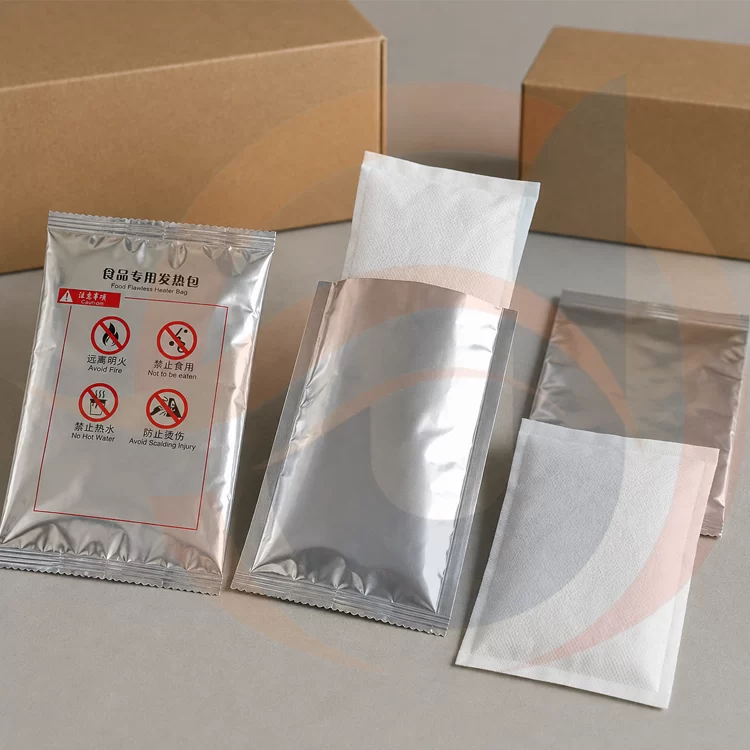
This guide focuses on water-activated systems for compatible prepared food. Use it to decide what to specify, what to test, and which questions to resolve before ordering samples.
Quick Answer
A self-heating bag for food is an outer heating bag used with a compatible heater and sealed meal pouch. Water activates the heater, which transfers heat through the food packaging. Choose the complete system around the filled meal’s dimensions, weight, starting temperature, and intended heating conditions.
Website product-range image. The illustrated components are different options, not one standard kit.
Start by Identifying What You Are Buying
The term “self-heating bag” can describe different items in a quotation. It may mean the outer bag alone, a bag supplied with a heating element, or a complete kit with food and accessories. These are different purchasing scopes.
| Item | Main job | What to confirm |
|---|---|---|
| Outer heating bag | Holds the heating assembly in the intended arrangement | Usable dimensions, seams, opening, and venting |
| عنصر التسخين | يُنتج حرارة بعد التنشيط | Model, quantity, water requirement, and instructions |
| Protective heater wrapper | Protects the unused element during storage | Seal condition and storage requirements |
| Food pouch | Separates the food from the heating contents | Heating compatibility and filled dimensions |
| Finished meal kit | Combines the agreed components | Exact contents supplied per retail unit |
Before comparing prices, check whether the self-heating bag includes a heater. A picture containing several components does not establish what is included in the order.
Choose the Bag Around the Filled Meal
Measure a finished food pouch, including its sealed edges and the thickest filled area. An empty packaging sample may look suitable while the actual meal is difficult to insert or remove.
Ask the supplier for usable internal dimensions rather than relying only on the outside bag size. Seals, a bottom fold, and the required top arrangement can reduce the space available for the meal and heater. There is no universal clearance that suits every construction.
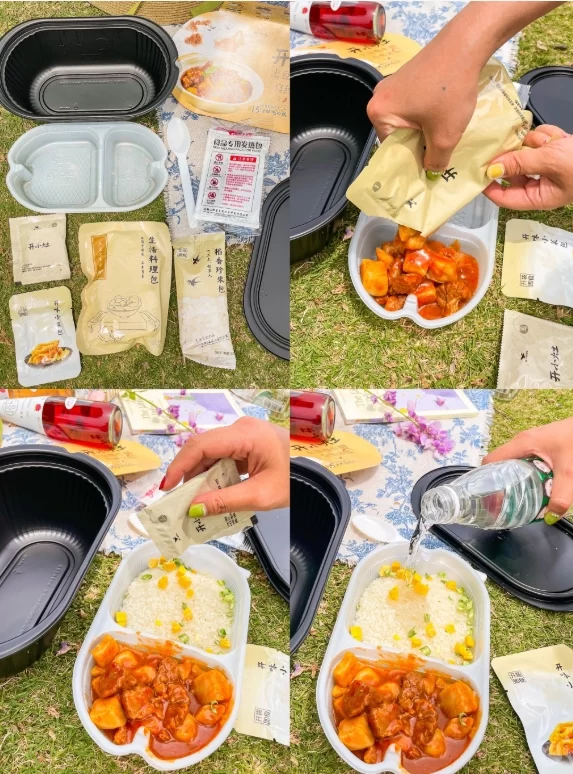
Use our self-heating bag size guide to prepare a dimensional brief. Once a candidate bag is selected, assess how the food pouch fits inside it during assembly and removal.
A bag, a heater, and a food pouch must be evaluated together. Editorial illustration; not a product specification or operating diagram.
Match Heating Performance to the Actual Food
Two meals of equal weight can warm differently. A thin pouch of sauce and a thick pouch of rice have different shapes, and the distance from the heated surface to the center can differ considerably.
Specify the starting food temperature, expected surroundings, target serving result, and package geometry. A high heater-surface temperature does not prove that the whole meal reaches the intended temperature.
For a larger portion, review how to choose a bag for large meals. If the kit contains two separate food pouches, treat that arrangement as a separate test configuration; see heating more than one pouch.
Compare the Bag Format and Materials
A stand-up base may help a bag hold its shape in a design intended for upright use. A flat bag may pack more compactly. Neither shape establishes the correct operating position: use the position specified for the complete system.
Compare stand-up and flat heating bags against the meal, assembly method, and retail pack. Then confirm the film construction, seam performance, and conditions the supplier has evaluated.
Material suitability depends on intended conditions of use. The FDA food-contact conditions reference explains this distinction. Our heating-bag materials guide separates the outer bag, protective wrapper, and food pouch so that the correct documents can be requested for each.
Decide Whether Heating or Insulation Solves the Problem
A water-activated bag generates heat when the compatible element is activated. An insulated lunch bag mainly slows temperature change. These products answer different questions.
If you need to transport chilled food, plan its cold storage separately from later heating. If the food is already hot, a suitable insulated container may be the relevant option. Compare self-heating bags and insulated lunch bags before choosing a format.
Test Before Approving a Commercial Kit
Use the actual meal, heater, and outer bag. Record enough information to reproduce the result rather than relying on a demonstration with unspecified contents.
| Test area | Record or observe |
|---|---|
| شروط البداية | Food and ambient temperature, meal weight, water quantity |
| Fit | Insertion, intended heater position, and removal |
| Performance | Food temperatures at defined locations and elapsed times |
| التعامل | Stability, leakage, hot surfaces, and vent clearance |
| تعليمات | Whether a first-time user can identify each component |
| Packaging condition | Seams and surfaces before and after the specified cycle |
Do not infer a reusable design from a successful single cycle. Confirm the intended life of each component using the bag and heater reuse checklist.
Information to Send with an Inquiry
Prepare the food type, portion weight, filled pouch dimensions, starting temperature, target heating result, and intended application. Add the expected quantity, destination market, preferred printing, and any retail-kit requirements.
جويتايد water-activated heating solutions include configurations for compatible food pouches and meal systems. Confirm the specific bag, heater, documents, and sample availability for your project.
For tray-based meals, a وعاء طعام ذاتي التسخين may be more suitable than a flexible bag. The food format should guide that decision.
التعليمات
Does every self-heating bag need water?
This guide covers water-activated systems. Use the activation method and water quantity supplied with the selected model; do not apply another product’s directions.
Can I put loose food directly in the heating bag?
Not in the systems described here. The food must remain in its compatible sealed food pouch, separated from the heater and activation liquid.
Can a bag that fits the meal still perform poorly?
Yes. Physical fit does not confirm adequate heat transfer. Meal thickness, starting temperature, heater output, and arrangement must also be evaluated.
Is there one heating time for every meal?
No. Follow the validated instructions for the complete meal system. Avoid applying a time from a different portion, package, or starting condition.
What should I do before placing a bulk order?
Approve the exact components and test them together with your meal. Confirm the specification, operating instructions, labeling, packing, and commercial terms.
Send JOYTIDE your meal and packaging requirements to discuss a suitable sample configuration.

 English
  German
  French
  Korean
  Japanese
  Russian
  Arabic
  Portuguese
  Spanish