
A self heating bag for food sounds simple enough: add water, wait a little while, and eat a warm meal.
And from the user’s side, it should feel that simple.
Behind that simplicity, however, several things have to work together.
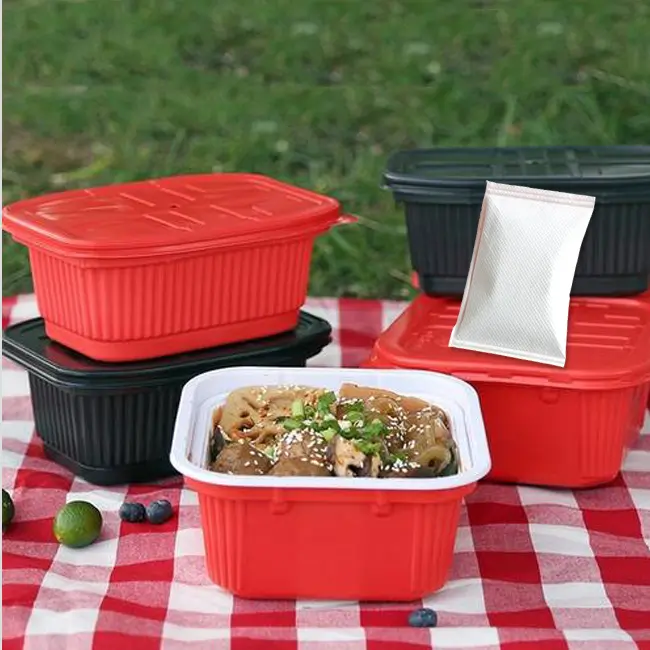
The heating pack needs to suit the amount of food. The pouch or tray needs to fit the heating system. The food package has to tolerate the intended heating conditions. The amount of activation water needs to be right. And, perhaps most importantly, the heater needs to be tested with the food it will actually be used with.
That’s why choosing a self heating bag isn’t really about finding the biggest or hottest heating pack.
It’s about finding the right match for the meal.
What Is a Self Heating Bag for Food?
A self heating bag for food is a portable meal-heating system that uses a water-activated heating pack to warm compatible prepared food without requiring electricity or an open flame.
The food normally remains sealed inside its own pouch or container.
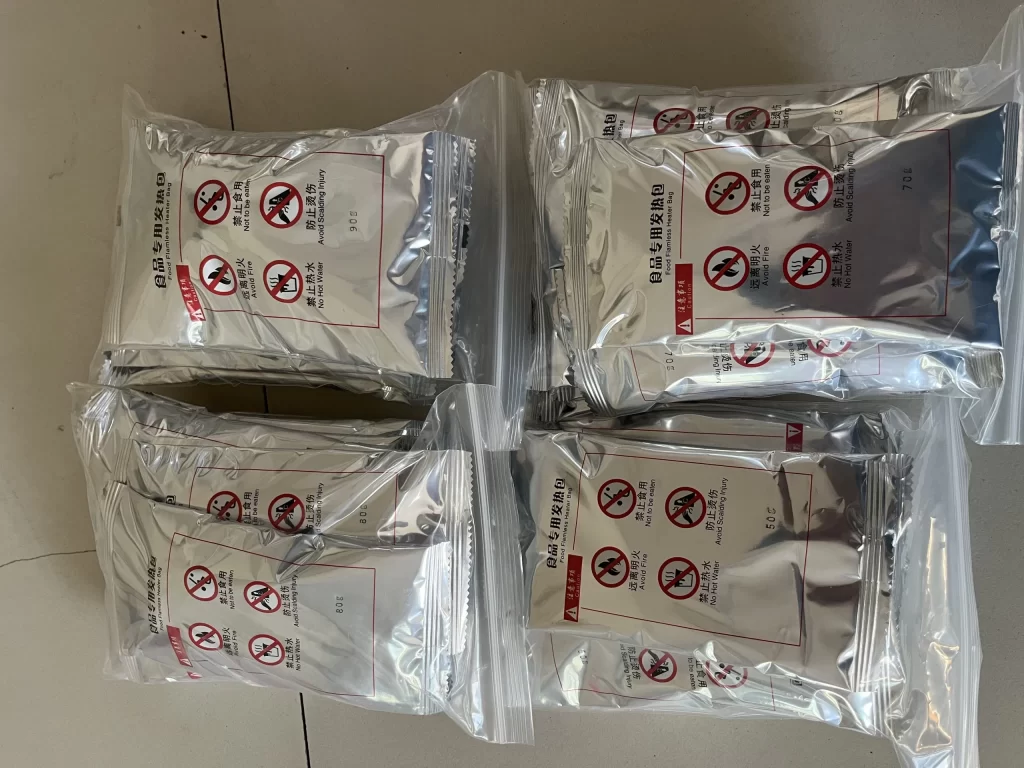
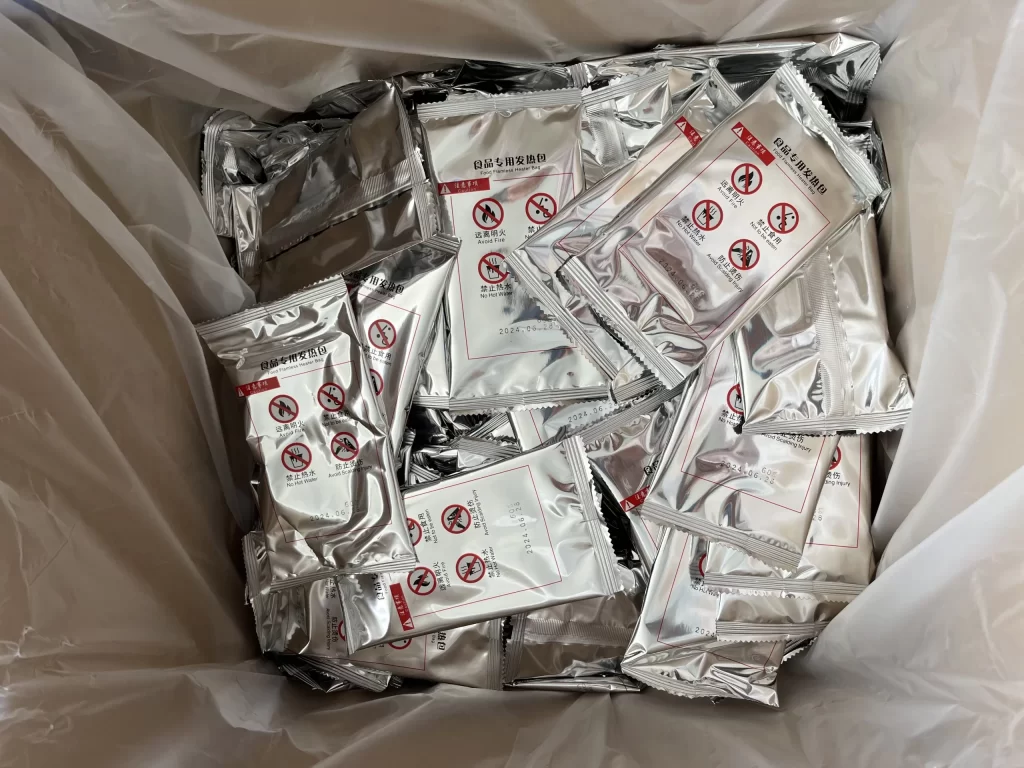
The heater sits separately inside the heating bag or heating compartment. When the specified amount of water is added, an exothermic reaction begins inside the heater pack and releases heat.
That heat transfers through the food packaging and warms the meal.
A typical system looks something like this:
Water + heating pack → heat → sealed food pouch → warm meal
The heating material itself should remain separate from the food.
For businesses developing ready-to-eat food products, JOYTIDE’s flameless food heating solutions include water-activated heater configurations for compatible packaged meals.
What Foods Can You Use in a Self Heating Bag?
This is one of the first questions buyers ask, and the answer isn’t limited to one particular type of meal.
Depending on the heater and packaging system, a self heating bag may be used with prepared foods such as:
- Rice meals
- Noodles
- Pasta
- Soups
- Stews
- Curry-style meals
- Prepared vegetables
- Prepared meat dishes
- Ready-to-eat food pouches
- Other compatible packaged meals
But there’s an important catch.
Knowing the type of food isn’t enough to choose the heater.
Let’s say you have two products.
One is 350 g of rice in a flat pouch.
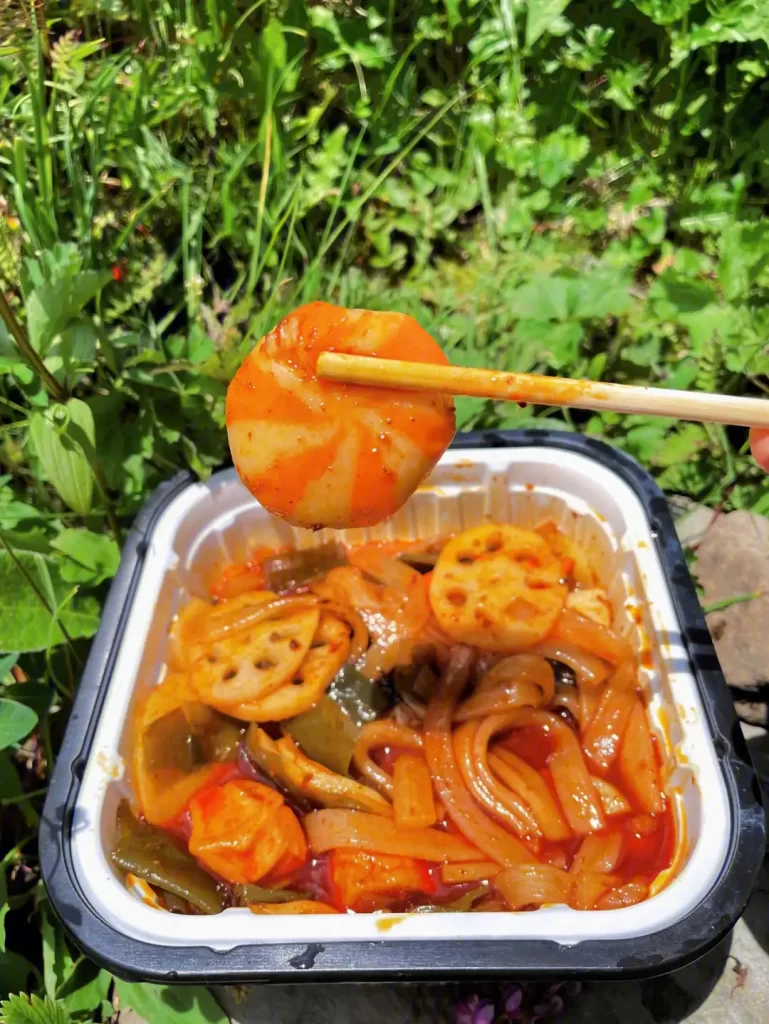
The other is 350 g of thick stew in a deep container.
Same weight.
Very different heating situation.
The rice may be spread across a relatively large area close to the heater. The stew may be several centimeters deep, meaning heat has farther to travel before the center becomes warm.
This is why a heater that works well with one 350 g meal shouldn’t automatically be assumed to work equally well with every other 350 g meal.
The Food Comes First, Not the Heater
This is probably the most useful advice for anyone developing a commercial self-heating meal.
Don’t start with:
“Which heating pack should I buy?”
Start with:
“What exactly am I trying to heat?”
Before selecting a self heating pack for food, write down five things:
1. Food type
Rice, noodles, soup, stew, pasta, hot pot, or something else?
2. Net food weight
How many grams of food are in one serving?
3. Package dimensions
Is it a thin pouch, a bowl, a rectangular tray, or a divided container?
4. Starting temperature
Will the food normally begin at room temperature or under refrigerated conditions?
5. Desired result
How warm should the food become, and roughly how long should preparation take?
Once you know those things, heater selection becomes much more meaningful.
Why Food Weight Alone Can Be Misleading
It’s natural to think:
More food = bigger heater.
That’s partly true, but it isn’t the whole story.
Food thickness matters.
Food composition matters.
Packaging matters.
Starting temperature matters.
Even the way the meal sits against the heating area can change the result.
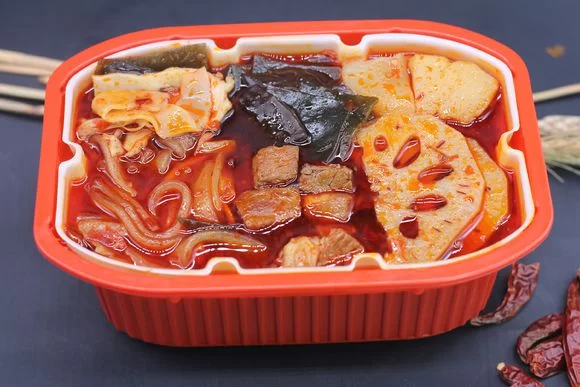
Imagine two 400 g meals again.
The first is a flat rice pouch.
The second is a deep bowl of soup.
If the heat source is underneath both packages, the center of the deep bowl is farther away from the heater.
So instead of comparing heating packs only by weight—40 g, 50 g, 60 g, and so on—commercial buyers should compare the performance of the complete meal + packaging + heater system.
That’s a much better way to evaluate a product.
Pouch or Tray? The Packaging Format Changes the System
A self heating food product can generally be built around different packaging formats.
Two of the most common are flexible food pouches and rigid or semi-rigid food trays.
Self Heating Bags for Food Pouches
A pouch-style system usually places the sealed food pouch close to a water-activated heater inside an outer heating bag.
This can work well when compact packaging is important.
The food pouch should fit naturally inside the heating system without excessive folding or awkward positioning.
Good contact between the heating area and the food package can also help heat transfer.
Self Heating Containers for Food Trays
Some meals simply work better in a tray.
Rice with side dishes is a good example.
So are noodles, soups, hot pot products, and meals that need separate compartments.
In this type of system, the heater is normally positioned in a lower heating compartment while the food sits inside a separate tray above it.
JOYTIDE’s self-heating food containers and meal boxes include round and rectangular formats for rice, noodles, soup, hot pot, and other ready-to-eat meals.
The important thing is that the food tray and heater compartment remain separate while still allowing effective heat transfer.
How Does a Self Heating Bag for Food Work?
The basic process is surprisingly straightforward.
Water reaches the heating composition inside the heater pack.
That starts an exothermic reaction.
In simple terms, the reaction releases heat.
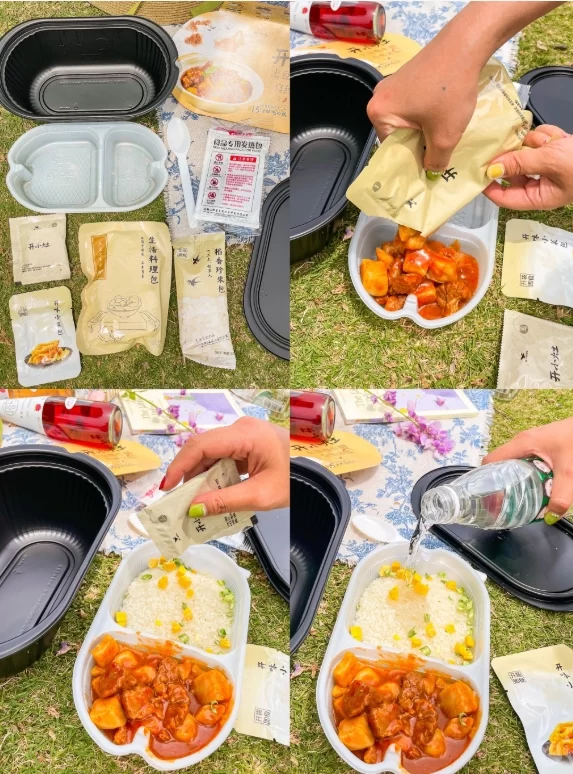
The surrounding heating bag or container keeps the heater positioned near the sealed food package so that heat can transfer toward the meal.
No electrical connection is needed during normal operation.
No burner is required.
But there is one detail worth remembering:
Different heaters have different activation requirements.
The amount of water printed on one heating pack shouldn’t automatically be used for another.
More water doesn’t necessarily mean more heat.
The correct amount is the amount specified for that particular heater.
How Long Does a Self Heating Bag Take to Warm Food?
There isn’t one universal answer.
And that’s actually a good way to spot an oversimplified product claim.
If someone tells you every meal will be ready in exactly the same number of minutes without asking what you’re heating, they’re leaving out a lot of important information.
Heating time can be affected by:
| Factor | Why It Matters |
|---|---|
| Food weight | Larger portions generally require more energy |
| Food thickness | Heat needs time to reach the center |
| Starting temperature | Colder meals require a greater temperature rise |
| Heater configuration | Different heaters have different performance |
| Water quantity | Correct activation depends on the heater |
| Packaging | Shape and material influence heat transfer |
| Ambient temperature | Cold surroundings can increase heat loss |
For an individual consumer, the answer is simple:
Follow the heating time supplied with the product.
For a food company, the better approach is to test the heater with the actual meal under realistic conditions.
Can a Self Heating Bag Heat Refrigerated Food?
Potentially, but this should be tested rather than assumed.
A meal that begins at 5°C has a very different heating requirement from the same meal starting at 20°C.
If your finished food product will normally be refrigerated, sample testing should begin with refrigerated food.
Don’t leave the sample at room temperature for several hours and then use that result to represent normal customer use.
The packaging also matters here.
The U.S. Food and Drug Administration distinguishes food-contact materials according to their intended conditions of use. Its reference on Food Types & Conditions of Use for Food Contact Substances specifically includes frozen or refrigerated ready-prepared foods intended to be reheated in their containers.
For commercial products, that means the actual food-contact package and its intended heating conditions should be considered together—not separately.
Is the Heating Material in Contact with the Food?
It shouldn’t be.
A properly configured self heating food system keeps the two physically separated.
The heater material stays inside the heating pack.
The food stays inside the food pouch or tray.
Heat moves between the two through the packaging.
That’s why the system isn’t simply “a chemical pack next to food.”
The packaging layers are an important part of the product design.
FDA explains that food packaging and its components fall within the broader category of food-contact substances, and that intended use is part of how those substances are evaluated. More information is available in the FDA’s overview of Food Packaging & Other Substances That Come in Contact with Food.
For a food brand, the practical takeaway is straightforward:
Don’t evaluate only the heater. Evaluate the food package too.
Does “Food Grade” Mean the Package Is Suitable for Heating?
Not necessarily.
This is an easy assumption to make.
A package may be suitable for holding a particular food under one set of conditions but not necessarily under every possible heating condition.
Temperature, contact time, food composition, and intended use can all matter.
FDA’s food-contact guidance distinguishes different conditions of use, ranging from room-temperature and refrigerated storage to reheating and higher-temperature applications.
So for commercial self-heating food products, it’s better to ask:
“Is this packaging suitable for this food under our intended heating conditions?”
rather than simply:
“Is this food grade?”
That question is much more specific.
Can a Self Heating Bag Cook Raw Food?
A typical portable self heating bag should be treated primarily as a way to warm prepared food.
Cooking raw ingredients is a different task.
Raw meat, poultry, seafood, and other ingredients may require specific internal temperatures and controlled cooking conditions.
Unless the complete system has specifically been designed and validated for cooking the particular raw food involved, don’t rely on a standard portable food-heating bag to replace conventional cooking.
For most applications, think:
prepared meal → heated meal
rather than:
raw ingredients → cooked meal
Does a Self Heating Bag Make Food Shelf-Stable?
No.
The heating system has nothing to do with whether the food can safely sit on a shelf for months.
Shelf stability comes from the food’s processing, packaging, and storage requirements.
For example, USDA’s Food Safety and Inspection Service explains that a retort pouch is a flexible package in which appropriate foods undergo commercial thermal processing. That processing and packaging—not the presence of a heater—are what allow the product to be shelf-stable at room temperature.
So if your food normally needs refrigeration, putting a heating pack beside it doesn’t change that.
The heater heats.
The food-processing system determines storage.
They are two different things.
Is a Self Heating Bag Safe?
Used according to its product instructions, a properly designed self-heating system keeps the heating material separate from the food.
But “no open flame” doesn’t mean “no heat.”
Quite the opposite.
The heater is supposed to become hot.
That means users still need to pay attention to:
- Hot surfaces
- Hot water
- Escaping vapor
- Correct water quantity
- Stable placement
- Proper ventilation
- Handling the heated food package
- Cooling the used heater before disposal
Never open the heater pack itself or consume the activation water.
The instructions supplied with the specific heater should always take priority over generic advice.
What Should a Food Brand Test Before Ordering?
This is where I would spend more time if I were developing a new self-heating meal.
Don’t test only whether the heater “gets hot.”
That’s too easy.
Test whether the meal works.
Start with the Actual Food
Don’t replace the meal with water simply because it’s easier to measure.
If you’re selling rice, test rice.
If you’re selling noodles, test noodles.
If you’re selling stew, test the actual stew formulation.
Use the Actual Package
A different pouch shape can change how the meal sits against the heater.
A different tray depth can change how far heat has to travel.
Testing the intended package gives you much more useful information.
Reproduce the Real Starting Temperature
If customers will take the meal from refrigeration, start the test there.
If it will normally be stored at room temperature, test that condition.
Measure More Than One Point
The part of the meal closest to the heater may be hot while the center is still relatively cool.
Check multiple locations.
Test the User Experience
Give the finished system to someone who hasn’t seen it before.
Don’t explain how it works.
Watch.
Can they identify where the water goes?
Do they know how much to add?
Can they position the meal correctly?
Do they understand how long to wait?
Can they remove the food comfortably?
A good self heating bag should be easy to understand without someone standing beside the customer giving instructions.
What Information Should You Send a Self Heating Bag Supplier?
If you’re sourcing for a commercial food product, sending the right information at the beginning can save a lot of back-and-forth.
Instead of asking:
“How much is your self heating bag?”
send something closer to this:
| Information | What the Supplier Needs |
|---|---|
| Food type | Rice, noodles, soup, stew, etc. |
| Food weight | Net weight per serving |
| Package | Pouch, tray, bowl, divided container |
| Dimensions | Length × width × thickness/depth |
| Starting temperature | Room temperature, refrigerated, etc. |
| Target result | Desired serving temperature |
| Heating time | Preferred preparation time |
| Market | Destination country or region |
| Quantity | Sample quantity and estimated bulk order |
| Customization | Bag printing, instructions, branding, packing |
Now the supplier can evaluate an actual project instead of guessing.
JOYTIDE’s Why Choose JOYTIDE page outlines available options including heater dimensions, heating capacity, container configurations, printed instructions, private-label packaging, and sample evaluation.
Should You Choose the Largest Heating Pack?
Not automatically.
A bigger heater may produce more heat, but “more” isn’t always the same as “better.”
The objective is to warm the food appropriately within the intended system.
An oversized heater may add unnecessary cost or create a poor match with the package. An undersized heater may leave the center of the meal below the intended serving temperature.
That’s why heater selection should be based on testing rather than a simple rule like:
500 g food = X g heater.
Food isn’t that predictable.
A better process is:
Define the meal → select a proposed heater → test → measure → adjust → confirm.
That gives you a specification based on evidence rather than guesswork.
Custom Self Heating Bags for Food Products
Commercial projects often need more than a standard heating pack.
Depending on the product, customization may involve:
- Heater dimensions
- Heater weight or configuration
- Heating bag size
- Printed activation instructions
- Water fill indicators
- Private-label packaging
- Food tray configuration
- Outer box design
- Packing arrangement
But customization should still begin with the food.
There’s little value in designing a beautiful heating bag first and discovering later that the actual meal pouch doesn’t fit comfortably inside it.
Start from the inside and work outward:
Food → food package → heater → heating bag/container → instructions → retail packaging
That order usually makes more sense.
FAQ: Questions Buyers Ask About Self Heating Bags for Food
How does a self heating bag for food work?
A water-activated heater releases heat through an exothermic reaction. The heater remains separate from the food while heat transfers through compatible packaging to warm the prepared meal.
Does a self heating bag need electricity?
No. Water-activated self heating bags don’t require an electrical outlet during normal use.
How much water should I add?
Use the quantity specified for the selected heater. Different heater formulations and sizes may require different amounts of activation water.
How long does it take to heat food?
Heating time depends on food weight, thickness, starting temperature, heater specification, packaging, water quantity, and ambient conditions. Use product-specific instructions or test data.
What food can I put in a self heating bag?
Depending on the system, compatible prepared rice, noodles, pasta, soup, stew, hot pot, and other packaged ready-to-eat foods may be suitable.
Can it heat refrigerated food?
Potentially, but refrigerated food has a greater heating requirement than the same meal at room temperature. The heater and meal should be tested from the intended starting temperature.
Can I put any food pouch inside?
No. The pouch needs to fit the heating system and be suitable for the food and intended heating conditions.
Does the heating material touch the food?
No. In a properly designed system, the heating material stays inside its heater pack while the food remains inside a separate pouch or tray.
Can a self heating bag cook raw meat?
Typical portable self heating bags are primarily intended to warm prepared food. Don’t rely on them for cooking raw ingredients unless the complete system has specifically been designed and validated for that purpose.
Can the heating pack be reused?
Most water-activated heating packs are intended for a single heating cycle.
Can self heating bags be customized?
Yes. Depending on the project, heater size, heating bag dimensions, printed instructions, branding, food containers, and outer packaging may be customized.
What information do I need for a quotation?
Provide the food type, portion weight, packaging format and dimensions, starting temperature, desired heating result, destination market, estimated quantity, and customization requirements.
Looking for a Self Heating Bag for Your Food?
The easiest way to choose a self heating bag for food is not to start with the heater.
Start with the meal.
Know what you’re heating, how much it weighs, how it’s packaged, where it starts temperature-wise, and what result you want.
Then match the heater to those requirements and test the complete system.
JOYTIDE supplies water-activated flameless food heaters and self-heating food containers for compatible ready-to-eat food products.
If you’re developing a new meal, contact JOYTIDE with your food type, portion weight, package dimensions, target heating result, destination market, and estimated quantity to discuss a suitable configuration.

 English
  German
  French
  Korean
  Japanese
  Russian
  Arabic
  Portuguese
  Spanish