
There are plenty of situations where you want a hot meal but have no interest in setting up a stove.
Maybe you’re halfway through a long drive. Maybe lunch is happening at an outdoor job site. Maybe you’re camping and want to keep the cooking gear to a minimum. Or perhaps you’re developing a packaged meal that customers should be able to warm almost anywhere.
A self heating bag for food is made for exactly these kinds of situations.
It doesn’t need an electrical outlet, microwave, or open flame. With a compatible prepared meal and the correct amount of water, the heating pack inside the system generates heat on its own.
That’s the simple version.
The more useful question is how these bags actually work, what they can realistically heat, and what you should look for if you’re choosing one for personal use or a commercial food product.
For different meal sizes and packaging formats, you can explore JOYTIDE’s flameless food heating solutions.
In Short: How Does a Self Heating Bag Heat Food?
A self heating bag for food uses a water-activated heating pack to generate heat through an exothermic reaction.
The prepared food stays sealed inside its own pouch or container. The heating material stays separate. When the specified amount of water is added to the heater, heat begins to build inside the heating compartment and transfers through the compatible food packaging.
No stove is needed.
No electrical connection is needed.
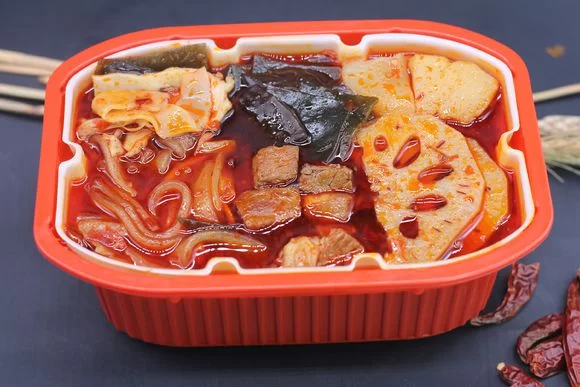
And because the heat comes from the reaction inside the heater rather than combustion, no open flame is required.
That makes the system particularly useful when carrying or using conventional cooking equipment would be inconvenient.
The Appeal Is Really About Simplicity
People sometimes focus on the chemistry behind a self heating bag. That’s understandable, but from a user’s point of view, the real advantage is much less technical:
It removes several steps between carrying a meal and eating it warm.
Think about a normal outdoor meal.
If you’re using a portable stove, you may need the stove itself, fuel, cookware, utensils, and somewhere suitable to set everything up. When you’re finished, some of that equipment may also need cleaning.
A self heating meal system approaches the problem differently.
The heating component travels with the meal. You activate it when needed, wait for the food to warm, remove the sealed meal, and deal with the used heater after it has cooled.
For one meal, that can be a very practical trade-off.
What’s Actually Inside a Self Heating Food Bag?
Although designs vary, most systems are built around the same basic idea.
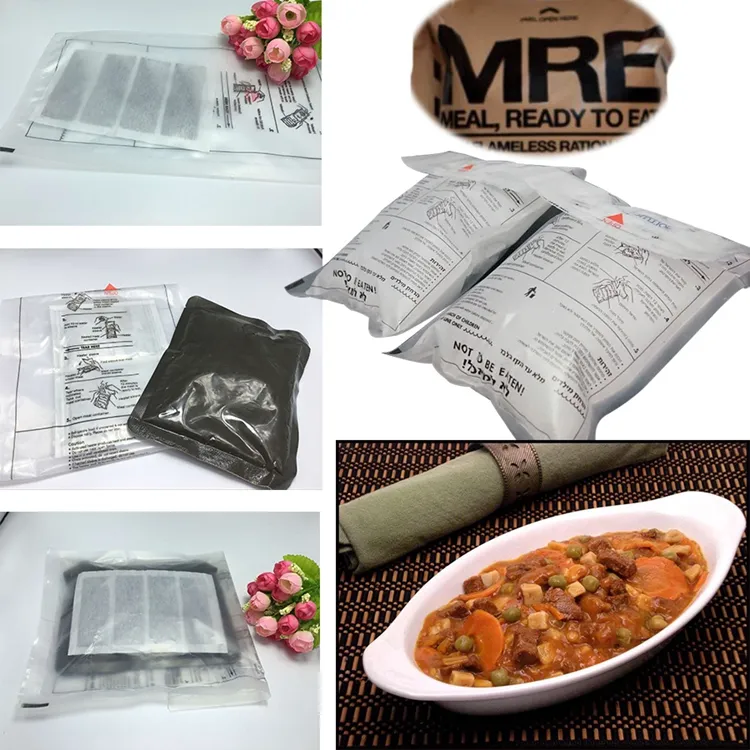
There is a heating element, a place for the activation water, a sealed food package, and an outer bag or compartment that keeps everything positioned correctly.
| Part | Purpose |
|---|---|
| Heating pack | Produces heat after water activation |
| Activation water | Starts the heating reaction |
| Heating bag or compartment | Keeps the heater close to the meal |
| Food pouch or tray | Keeps food separated from the heating material |
| Outer packaging | Protects unused components before use |
| Instructions | Explain water quantity, positioning, and heating time |
The heating pack itself is not food.
It shouldn’t be opened, and its contents should never be mixed with the meal.
Instead, heat passes from the activated heater through the compatible food packaging.
This distinction sounds obvious, but it’s important when designing a commercial self-heating meal. The heater, food pouch, and outer bag need to fit together properly rather than simply being three components placed in the same box.
For commercial meal projects, JOYTIDE’s magnesium-based flameless ration heater can be evaluated according to the actual food weight, package dimensions, and intended heating conditions.
No Stove Needed: Where Does That Actually Matter?
The phrase “no stove needed” sounds like a marketing line until you’re somewhere a stove is genuinely inconvenient.
That’s when the difference becomes obvious.
A Quick Meal While Camping
Not every camping meal needs to become a cooking project.
If you’ve spent most of the day hiking, setting up camp, or exploring, sometimes you simply want to sit down and eat.
A self heating bag can warm a compatible prepared meal while you take care of something else.
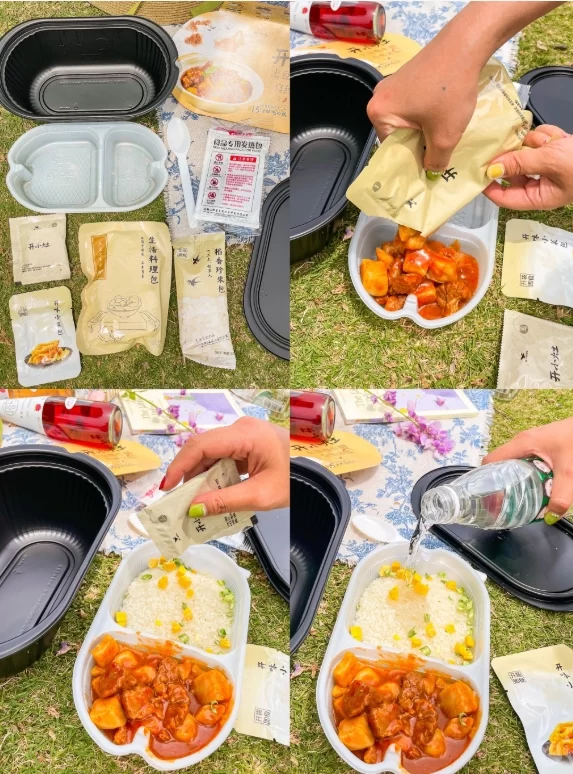
There is less equipment involved, and you don’t have to build the entire meal around cookware.
For people trying to travel light, that’s useful.
Of course, “flameless” doesn’t mean “ignore your surroundings.” The heater still produces substantial heat and hot vapor, so it should be used in a suitable location according to its instructions.
Lunch During a Road Trip
A road trip is another situation where the idea makes sense.
Prepared food is easy to pack. Heating it is usually the difficult part.
A portable self heating meal gives you the option of stopping at a suitable rest area, activating the heater according to its instructions, and having a warm prepared meal without searching for a microwave.
That’s especially useful on routes where food options are limited.
Outdoor and Remote Work
Anyone who regularly works away from a kitchen knows that bringing lunch and heating lunch are two different problems.
Construction sites, agricultural work, field maintenance, surveying, outdoor events, and similar jobs don’t always provide easy access to normal kitchen equipment.
A compact flameless food warmer can give workers another way to warm a compatible prepared meal during a break.
Picnics and Day Trips
You don’t need to be deep in the wilderness to find a portable food heater useful.
Sometimes you’re simply spending the day somewhere without cooking facilities.
Parks, fishing trips, day hikes, sporting events, and other outdoor activities can all create the same basic problem: you’ve brought food, but there is no convenient way to warm it.
Household Preparedness
Self heating bags can also serve as an additional food-heating option when normal kitchen equipment is temporarily unavailable.
This doesn’t mean every food stored at home suddenly becomes suitable for a heating bag.
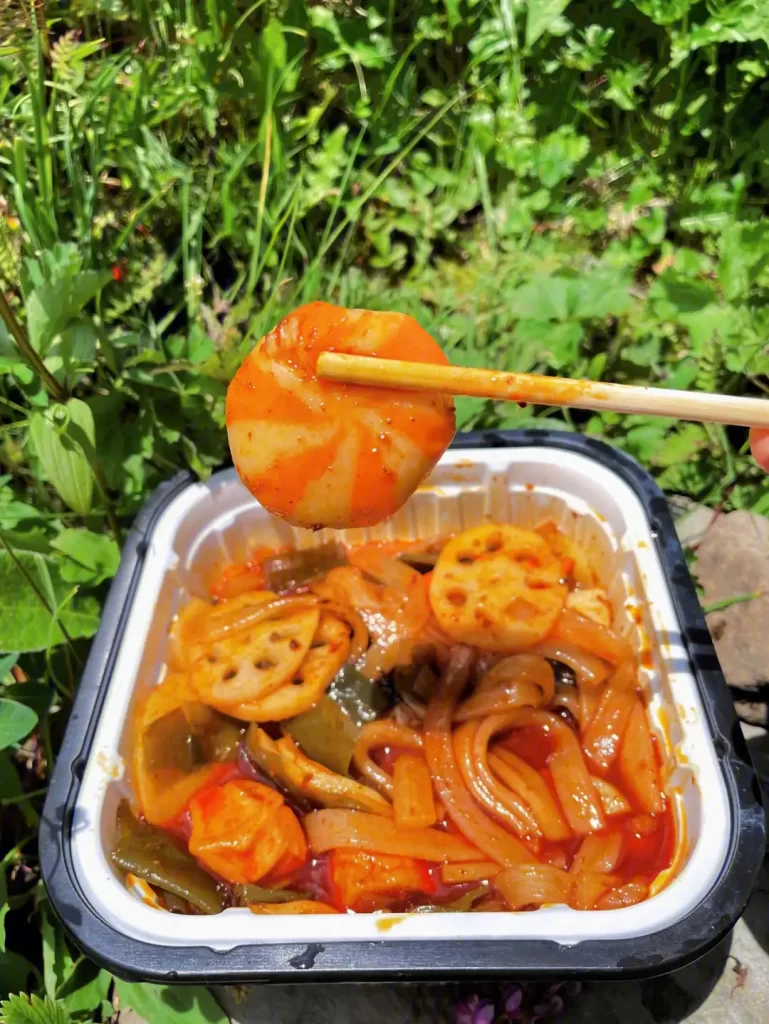
The meal still needs to be compatible with the heater, and its normal food-storage requirements still apply.
That distinction matters enough to come back to later.
Self Heating Bag vs. Portable Stove: They’re Not Really Competitors
It is tempting to ask which one is “better.”
That’s probably the wrong question.
A portable stove is much more versatile if you actually want to cook. You can boil water, prepare raw ingredients, use different cookware, and make a wider variety of meals.
A self heating bag does something narrower.
It is mainly designed to warm compatible prepared food with minimal equipment.
| Situation | Self Heating Bag | Portable Stove |
|---|---|---|
| Warming a prepared meal | Very convenient | Works, but requires more equipment |
| Cooking raw ingredients | Generally not its purpose | Better suited |
| Electricity required | No | No |
| Open flame | No | Usually yes |
| Cookware needed | Usually no | Usually yes |
| Setup | Minimal | More preparation |
| Cleaning cookware | Usually unnecessary | Often required |
| Flexibility | Designed around compatible meals | Much broader |
So if you’re planning a weekend where cooking is part of the experience, a stove gives you more flexibility.
If you simply want your packaged lunch warm with as little fuss as possible, the self heating bag starts to make more sense.
What Kind of Food Can You Heat?
This is where things get more interesting.
A self heating bag isn’t limited to one specific recipe, but neither can it be paired blindly with every food package.
Depending on the system, possible applications include:
- Prepared rice meals
- Noodles
- Pasta
- Soups
- Stews
- Curry-style meals
- Prepared hot pot meals
- Ready-to-eat food pouches
- Other compatible packaged foods
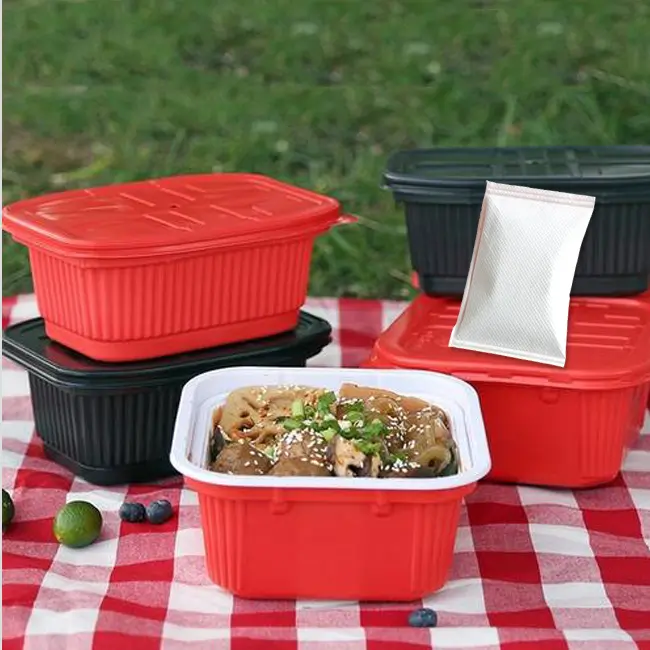
For rice, noodles, soups, hot pot, and other tray-style meals, you can also explore JOYTIDE’s self-heating food containers and meal boxes.
But the type of food is only the beginning.
A thin 300 g pouch of rice and a deep 300 g bowl of thick stew are not the same heating challenge.
The weight may match.
The way heat travels through the food does not.
Why Food Shape Matters More Than People Expect
Imagine holding two packages.
One is a flat pouch with the food spread across a relatively large surface.
The other is a deep bowl where much of the food sits farther away from the heater.
Even if both contain exactly 400 grams, the center of the deeper meal can take longer to warm.
That’s why professional heater selection shouldn’t begin with:
“I need a 50 g heater.”
It should begin with:
“This is my food, this is the package, and this is how warm I need it to become.”
The heater comes after that.
For a commercial food project, heater weight, food weight, package dimensions, starting temperature, and expected use conditions should be evaluated together.
How Long Does a Self Heating Bag Take?
There isn’t one honest answer that applies to every product.
You’ll sometimes see very specific heating times advertised online, but those numbers aren’t especially useful unless you know the conditions behind the test.
Heating performance can change with:
- Food weight
- Food thickness
- Starting food temperature
- Heater formulation
- Heater size
- Amount of activation water
- Packaging structure
- Contact between heater and meal
- Ambient temperature
A meal that begins at normal room temperature on a mild day isn’t the same as the identical meal starting cold in winter.
So instead of asking only:
“How many minutes does it take?”
A commercial buyer should ask:
“Under what test conditions was that heating time measured?”
That’s a much more useful question.
The Food Packaging Matters Too
The heater gets most of the attention, but the food package deserves just as much.
A pouch or tray that works well for storage isn’t automatically appropriate for reheating.
The U.S. Food and Drug Administration distinguishes food-contact materials according to the food involved and their intended conditions of use, including different storage and heating situations. Buyers developing packaged self-heating foods can review the FDA’s Food Types & Conditions of Use for Food Contact Substances when evaluating packaging for its intended application.
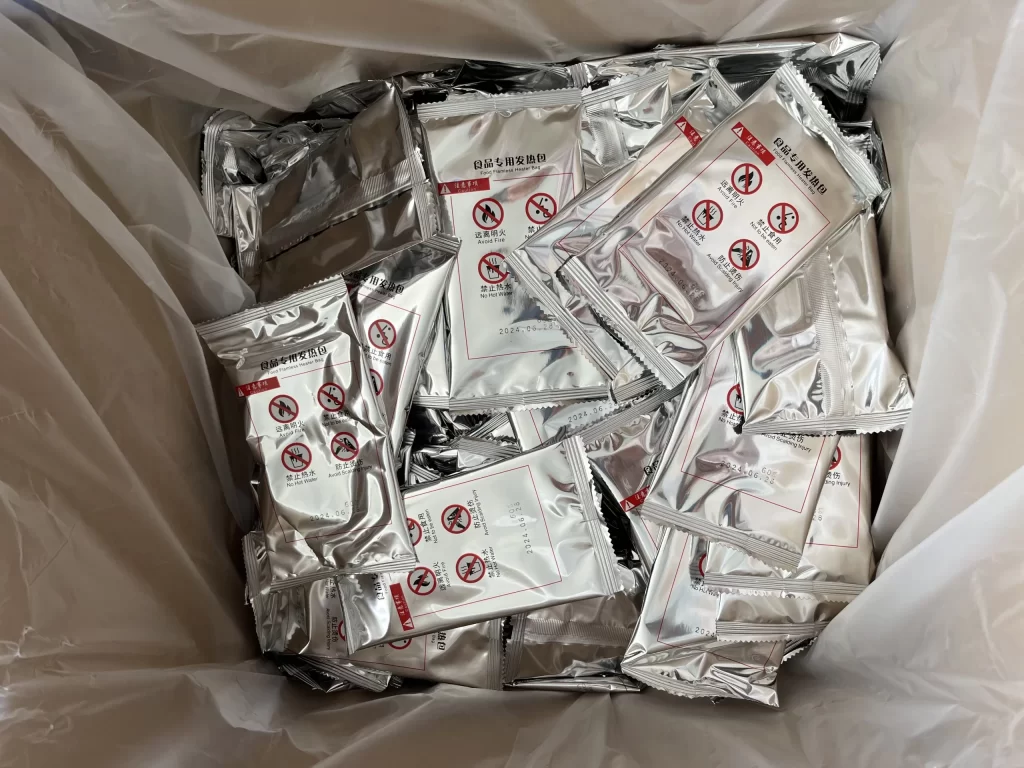
For a commercial self-heating food product, that means the actual pouch, tray, or container should be suitable for the conditions it will experience during heating.
In other words, don’t choose the heater first and treat the food package as an afterthought.
The two need to work together.
A Self Heating Bag Doesn’t Make Food Shelf-Stable
This is one of the easiest things to misunderstand.
The heater warms the food.
It does not preserve the food.
A refrigerated prepared meal doesn’t suddenly become safe to store at room temperature because a heater is packed beside it.
Shelf stability comes from how the food itself has been processed, packaged, and stored.
The USDA Food Safety and Inspection Service explains this distinction in its guidance on Shelf-Stable Food Safety, including commercially processed foods packed in retort and aseptic packaging.
So if a prepared meal says Keep Refrigerated, adding a heating pack doesn’t change that requirement.
Think of the food and heater as two separate products that happen to work together:
The food has its own storage requirements.
The heater has its own storage requirements.
How to Use a Self Heating Bag Without Making It Complicated
Different heaters have different instructions, so the manufacturer’s directions should always come first.
Still, the general process is usually straightforward.
Start by checking that both the food pouch and heater packaging are intact.
Place the sealed food and heater in their designated positions.
Add the specified amount of water to the heater—not an amount guessed from another product.
Once the reaction begins, position the bag as instructed and place it somewhere stable. Keep it away from your face and avoid blocking any intended venting path.
Then wait.
That’s the part people sometimes try to rush.
Opening and repositioning everything repeatedly doesn’t necessarily help. Give the system the time specified by the manufacturer.
When heating is complete, remove the meal carefully. The food, packaging, water, and heater may all be hot.
Allow the used heater to cool before disposal.
Simple.
But simple works best when the instructions are followed.
Is a Flameless Food Warmer Safe?
A properly designed self-heating food system keeps the heating composition separate from the food.
However, “flameless” should never be interpreted as “nothing gets hot.”
The whole purpose of the heater is to generate heat.
Hot surfaces, hot water, and vapor can therefore be present during operation.
The basic precautions are mostly straightforward:
- Don’t open the heater pack.
- Don’t consume the activation water.
- Don’t allow heater contents to contact the food.
- Don’t use more water than instructed.
- Don’t place the heating system directly against your skin.
- Don’t block its intended venting path.
- Keep it on a stable surface during operation.
- Handle the hot food pouch carefully.
- Let the used heater cool before disposal.
For commercial food products, packaging deserves additional attention. The FDA’s guidance on food-contact substances provides further information about substances used in materials that contact food and the regulatory framework surrounding them.
That makes compatibility testing important before a self-heating meal goes into commercial production.
What Should Food Brands Look for in a Self Heating Bag?
For a consumer buying one finished meal, most of the engineering work has already been done.
For a food company building its own product, the situation is different.
The heater becomes part of the overall product experience.
A customer doesn’t care whether a problem came from the heater, food pouch, tray, instructions, or outer package.
They simply know whether lunch heated properly.
So before choosing a heating pack, a food brand should be able to answer a few practical questions.
What Are You Heating?
“Food” isn’t enough information.
Is it rice?
Noodles?
Soup?
A thick stew?
A divided meal with rice on one side and vegetables on the other?
Heat behaves differently in each.
How Much Food Is in One Serving?
Net food weight helps estimate the amount of energy required.
But remember: weight should be considered together with food thickness and package shape.
What Package Are You Using?
Provide actual dimensions.
Length × width × thickness for a pouch.
Length × width × depth for a tray.
If drawings or samples already exist, even better.
What Temperature Does the Meal Start At?
Room temperature?
Refrigerated?
Something else?
This can make a major difference to the heating result.
What Result Do You Want?
Instead of saying:
“We need it very hot.”
Define something measurable.
What serving temperature are you trying to reach?
How quickly?
Under what ambient conditions?
Those answers make sample testing much more meaningful.
Don’t Buy a Heating Pack Based on One Number
One of the easiest mistakes in sourcing is comparing heaters by weight alone.
Supplier A offers 40 g.
Supplier B offers 50 g.
Supplier C offers 60 g.
It is tempting to assume the largest one must be the best.
Not necessarily.
What matters is how the complete heating system performs with your actual food.
A better supplier comparison looks at:
| Test Item | What to Record |
|---|---|
| Food | Type and recipe |
| Net weight | Weight per serving |
| Package | Material and dimensions |
| Starting temperature | Actual food temperature before heating |
| Ambient conditions | Approximate surrounding temperature |
| Heater | Model and specification |
| Water | Activation quantity |
| Heating time | Defined test intervals |
| Final result | Temperature at several areas of the meal |
Now you’re comparing something useful.
Another available configuration is JOYTIDE’s aluminum heating pack, which can be evaluated with compatible food-heating systems according to the requirements of the project.
A Good Self Heating Meal Should Be Easy the First Time
There is another part of product development that specification sheets rarely capture:
Can an ordinary customer actually use it?
Imagine handing the finished meal to someone who has never seen it before.
Don’t explain anything.
Let them read the packaging.
Do they know where to add the water?
Do they know how much?
Can they tell which part contains the heater?
Do they understand how the meal should be positioned?
Do they know how long to wait?
Can they remove the food without struggling with the packaging?
Those observations are valuable.
A heating system can perform beautifully in a controlled test and still frustrate customers if the instructions are confusing.
For private-label food products, good instructions are part of the product—not an accessory added at the end.
Building a Custom Self Heating Food Product
If you’re developing a commercial product, it’s usually easier to start with the meal rather than browse heater specifications and try to work backward.
Prepare the following information:
| Project Detail | Information to Provide |
|---|---|
| Food | Rice, noodles, soup, stew, etc. |
| Net weight | Weight of one serving |
| Food package | Pouch, bowl, or divided tray |
| Dimensions | Actual package measurements |
| Starting condition | Expected food temperature |
| Use environment | Typical conditions where customers will heat it |
| Heating target | Desired serving temperature and approximate time |
| Market | Destination country or region |
| Branding | Printed bag, instructions, private label |
| Quantity | Samples and expected bulk volume |
From there, a heater configuration can be proposed and tested.
If the meal uses a pouch, a bag-style system may make sense.
If the meal is designed around a tray, a self-heating food container may produce a better overall product.
And if the project requires a specific heater size, packaging arrangement, or heating configuration, the system can be evaluated around the finished meal rather than choosing a heater from a catalog first.
The Best Test Is Still the Real Meal
There is a point where specifications stop being enough.
You have to heat the food.
Not a cup of water used as a substitute.
Not an empty container.
Not a different meal with roughly the same weight.
Your food. In your packaging. Under realistic conditions.
Then open it and eat it.
Was the center warm enough?
Were some areas much hotter than others?
Was the pouch awkward to remove?
Was there too much water left in the heating compartment?
Were the instructions obvious?
Would you be happy if you had just bought this product?
Those questions are surprisingly effective.
Because ultimately, a self heating bag isn’t being sold to a thermometer.
It’s being used by a person who just wants a warm meal without turning the process into a chore.
FAQ
What is a self heating bag for food?
A self heating bag for food is a portable heating system that uses a water-activated heater to warm compatible prepared meals. It normally works without electricity, a microwave, or an open flame.
Does a self heating bag need a stove?
No. A water-activated self heating bag generates its own heat after the specified amount of water is added to the heater.
Does a self heating food bag need electricity?
No. Water-activated models use an exothermic reaction rather than electrical power to generate heat.
Can I use a self heating bag for camping?
A self heating bag can be useful for compatible prepared meals during camping and other outdoor activities. Always follow the product instructions and any rules that apply at the location where you’re using it.
Can a self heating bag cook raw food?
Most portable self heating bags are intended to warm prepared food rather than cook raw ingredients. Don’t rely on one to cook raw food unless the complete system has specifically been designed and validated for that purpose.
How long does a self heating bag take to warm food?
It depends on the heater, food weight, package shape, starting temperature, activation-water quantity, and ambient conditions. Use the instructions and test results for the specific heating system rather than assuming one heating time applies to every product.
What types of food work with self heating bags?
Depending on the system, prepared rice, noodles, soups, stews, pasta, hot pot products, and other packaged ready-to-eat foods may be suitable. The food package and heater should be tested together.
Is the heating material mixed with the food?
No. In a properly designed system, the heating material stays inside its own pack and remains physically separated from the food.
Does a self heating bag make food shelf-stable?
No. Shelf stability depends on the food’s processing, packaging, and storage requirements. The heating pack only provides a way to warm the food.
Can self heating bags be customized?
Yes. Commercial projects may require different heater dimensions, heating configurations, outer bags, meal containers, printed instructions, branding, or packing arrangements.
Need a Self Heating Bag for Your Food Product?
Choosing a heater becomes much easier once the meal itself is defined.
If you’re developing a ready-to-eat meal, self-heating food product, outdoor meal, or private-label food package, start with the food weight, package dimensions, expected starting temperature, target heating result, destination market, and estimated order quantity.
JOYTIDE supplies water-activated self heating bags, heating packs, and compatible self-heating food containers for different prepared-food applications.
Rather than selecting a heater only from a catalog, the more reliable approach is to match the heating system to the actual meal and confirm the result through sample testing.
Contact JOYTIDE with your food type, portion weight, package dimensions, target heating result, destination market, and estimated order quantity to discuss a suitable heating configuration.

 English
  German
  French
  Korean
  Japanese
  Russian
  Arabic
  Portuguese
  Spanish